

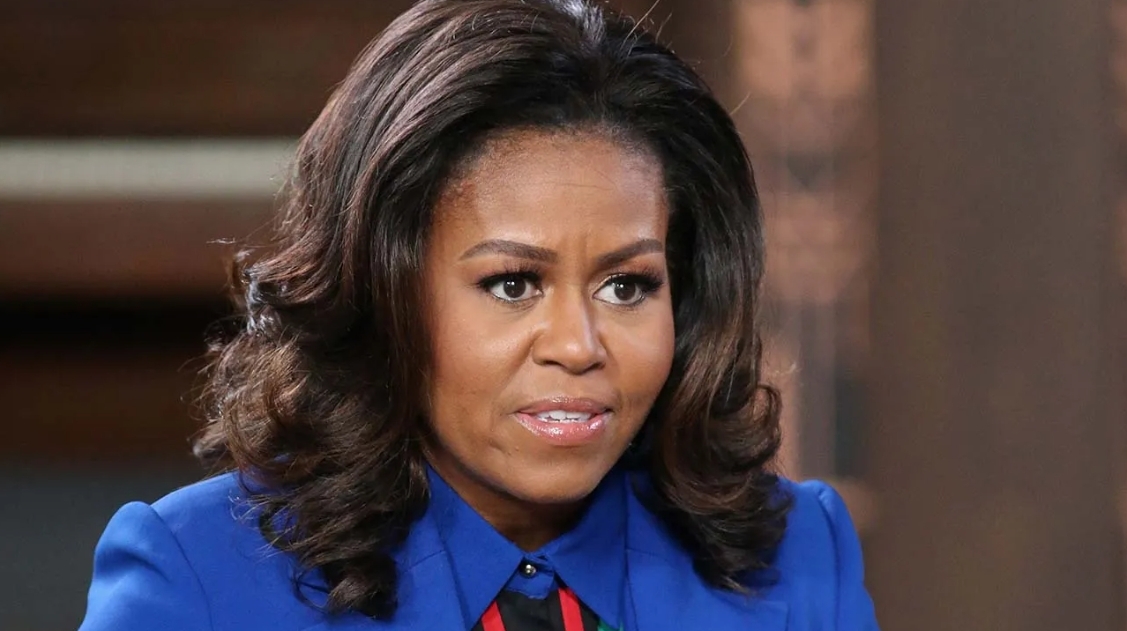

Michelle Obama’s latest remarks during the rollout of her new fashion book The Look are drawing sharp attention — and stirring more than just the usual style talk. In a candid conversation with actress Tracee Ellis Ross, the former first lady peeled back the political polish and stepped squarely into one of the nation’s most sensitive intersections: race, beauty standards, and cultural conformity.
Obama, whose carefully curated public image during her eight years in the White House often drew admiration, now says much of that effort was fueled by a quiet battle against what she calls “exhausting” white beauty standards. At the heart of her grievance? Her hair — specifically, the decision to wear it straight instead of embracing its natural texture.
In the interview, Obama claimed that conforming to the unspoken expectations of white America was not just about elegance or protocol but about safety and acceptance.
She recalled lessons learned growing up in Chicago, where she says the way she presented herself — what she wore, how she spoke, even what she carried — could determine whether she was trusted or accused of wrongdoing.
But her focus wasn’t limited to her past. She turned her critique directly toward white Americans, arguing that black women have been “trapped by the straightness” of their hair in order to fit in.
Her remarks then shifted into sweeping generalizations — linking straightened hair to why “so many of us can’t swim” or go to the gym, claiming black women avoid water and sweat not because of preference or practicality, but due to societal pressure to maintain Eurocentric hair norms.
“It is exhausting,” she said. “And it’s so expensive and it takes up so much time.”

Obama’s statements seemed to crescendo toward frustration — not just over hair, but over what she sees as white society’s interference in black identity. She invoked the CROWN Act, legislation that prohibits discrimination based on hair texture and style, as proof that systemic bias runs so deep it requires federal law to protect natural hair.
“Don’t tell me how to wear my hair, don’t wonder about it, don’t touch it — just don’t!” she concluded, delivering what sounded less like a fashion insight and more like a final word in a cultural courtroom.