

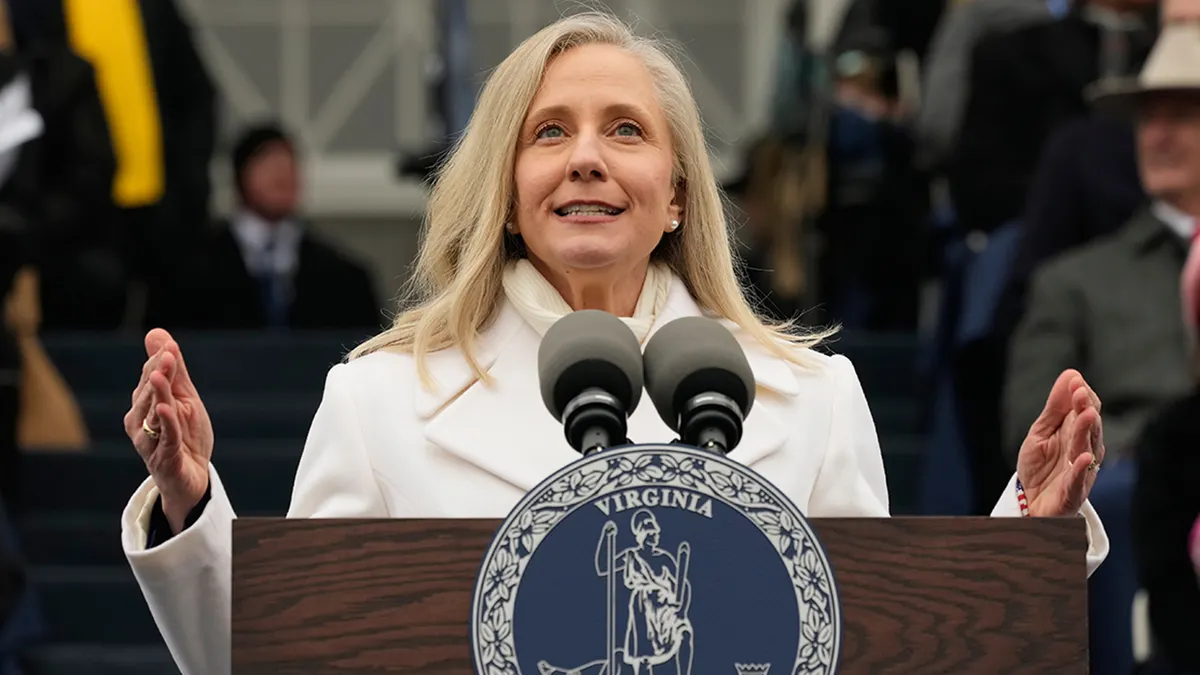

The political temperature in Virginia has spiked unusually fast, with Governor Abigail Spanberger finding herself at the center of a fierce and very public backlash just weeks into her tenure. Critics have wasted no time defining her, painting a picture of a leader who campaigned as a centrist but is now accused of governing in a very different direction.
You're proposing a bill that would force working class people to pay for things like a leaf blower tax, gym membership tax, dog grooming tax, dry-cleaning tax and vehicle repair tax, JUST to name a few.
You're a radical marxist pretending to be a moderate soccer mom. https://t.co/yEujUL8WDH
— Meghan McCain (@MeghanMcCain) April 11, 2026
The language has been blunt, even by modern standards, with opponents alleging that promises made on the campaign trail—particularly around moderation and redistricting—are already being tested against early policy moves.
You are flat out wrong @MeghanMcCain Do your homework. The @GovernorVA proposed no such taxes and none passed. Stop lying and sounding like @realDonaldTrump https://t.co/k2f1ZrxIqn
— Barbara Comstock (@BarbaraComstock) April 11, 2026
Taxation has become a central flashpoint. Detractors argue that recent fiscal decisions are hitting Virginians harder than anticipated, fueling accusations that the administration is downplaying the scope or impact of those policies.
Here is a local @7NewsDC segment outlining the entire proposal. So really, why the hell are you lying Congresswoman? How about you do your homework before screwing over the people of Virginia.https://t.co/KG5bl59Oh9 https://t.co/MyCM7KoDhr
— Meghan McCain (@MeghanMcCain) April 11, 2026
Whether those claims hold up under scrutiny is one matter; what’s clear is that the perception has taken hold among critics, and it’s spreading quickly across political circles and social media.
You are proving my point again @MeghanMcCain - this story you reference has nothing to do with the Governor’s agenda and none of these bills passed. See grok below. https://t.co/oJmpYdLigb
— Barbara Comstock (@BarbaraComstock) April 11, 2026
Into this charged atmosphere stepped former Congresswoman Barbara Comstock, whose defense of Spanberger immediately drew fire. Rather than cooling tensions, her response appears to have intensified them, particularly as opponents seized on her decision to invoke Donald Trump while addressing state-level tax concerns.
That rhetorical pivot became a focal point for critics, who framed it as deflection rather than engagement with the substance of the argument.
You are a liar. The bill didn't fail, it is on hold until after the 4/21 vote. https://t.co/VtsXYQLXWx
— Meghan McCain (@MeghanMcCain) April 11, 2026
The exchange didn’t end there. Figures like McCain entered the fray armed with counterpoints and documentation—“receipts,” as they’re often called in the current political vernacular—pushing the confrontation further into the spotlight.

The tone of the back-and-forth reflected a broader pattern: rapid escalation, sharp language, and little room for middle ground.
When Barbara Comstock was in the House she was widely known as the worst VA member to work for, a font of HR complaints. She lied about being pro life and pro gun and lined up for Kamala and Spanberger. An embarrassment.
No one will remember this pathetic old fail Karen. https://t.co/t89QvM0lIT
— Benjamin Domenech (@bdomenech) April 11, 2026
Hovering over all of this is an impending decision point, with an April 21 vote looming large. Opponents characterize it as a pivotal moment, alleging that the full implications of proposed actions have yet to be clearly presented to voters. Supporters, meanwhile, have largely focused on defending intent and framing the criticism as exaggerated or politically motivated.