


We've talked about this before, but it keeps coming back because the political class still doesn't seem to get it: the Trump coalition is not the same thing as the Republican Party. Those voters are not permanently attached to the GOP, and history already proved it. Plenty of them stayed home or voted for Democrats during the 2018 midterms, and a sizable chunk of that coalition still holds economically progressive views. They're much closer to the old Ross Perot voters than many Republicans want to admit.
That means Republicans can't simply assume those votes are locked in forever. They actually have to earn them. If they don't, those voters are perfectly willing to look elsewhere when someone speaks directly to the issues they care about.
That brings us to Wisconsin.
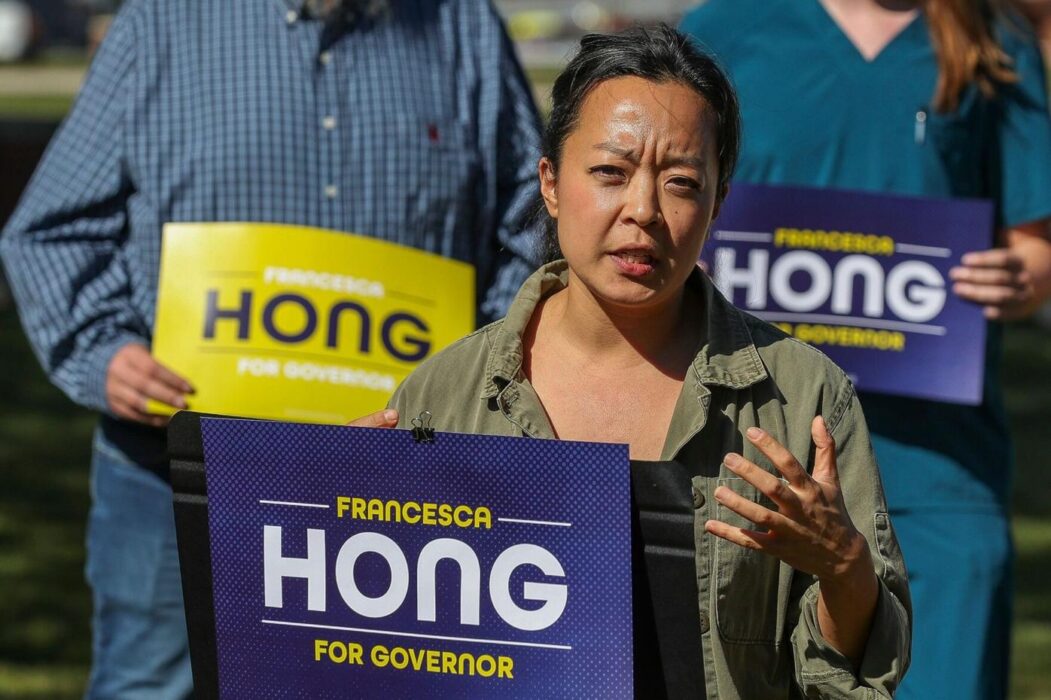
Democratic State Representative Francesca Hong is running for governor, and despite identifying as a democratic socialist, she's finding something that would have sounded unlikely just a few years ago: genuine interest from Trump voters.
Whether she ultimately wins the crowded Democratic primary on August 11 is another question entirely. But the fact that she's even making inroads outside the Democratic base is worth paying attention to.
NYT: Jeff Hanneman, a Republican who voted for President Trump, decided to cast his vote in the governor’s race for Francesca Hong in part because she wants to pause data center construction. https://t.co/tn2SMvXvv1 pic.twitter.com/DrbucyGrKf
— Politics & Poll Tracker 📡 (@PollTracker2024) July 3, 2026
The New York Times published an interesting report on July 3 documenting Hong's effort to appeal beyond her traditional supporters. Part of that comes from her personal story. Before entering politics, she worked as a chef. Her restaurant failed. She accumulated significant debt and was sued over it. That's not exactly an unfamiliar life experience for millions of working Americans who have struggled financially.
But her biography is only part of the equation.

The issue driving much of this crossover interest is something that hasn't received nearly as much national attention as it probably deserves: data centers.
Hong has made a statewide moratorium on new data center construction one of the centerpiece issues of her campaign.
According to the Times, Jeff Hanneman of Wisconsin Rapids became furious after learning about plans to build a 220-acre data center on the site of a closed paper mill near his home. Concerned about the potential impact on the Wisconsin River, the Republican Trump voter planted a "No Data Center" sign in his yard.

Then he planted another sign.
It read: "Francesca Hong for Governor."
"I really don't think or care about the label," Hanneman told the Times. "If she was voted into office, she could do a lot of good things for our state."
That's a remarkable quote coming from someone who voted for Donald Trump.
The newspaper followed Hong as she campaigned across Wisconsin, including a stop at Musky Fest in Hayward. There she struck up a conversation with Robert Olson, who happened to be wearing a "Trump 2028" hat. They found common ground discussing mental health services and teacher salaries.
When Olson joked about transgender people, Hong didn't engage. The Times reported that she briefly smiled, looked down, and shifted the conversation to other issues.
Afterward, Olson said he'd consider voting for her despite learning she was a democratic socialist.
"She's got her mind on the issues," he said. "And she never said what party she's with, which to me isn't that important."
The paper described similar interactions with other Republican-leaning voters, including Bob and Pam Boesch, who connected with Hong over affordable housing. When they later learned she identified as a democratic socialist, Pam Boesch admitted she was surprised because she had found Hong to be practical and sensible during their conversation.
What's tying many of these conversations together is opposition to large-scale data center development.
Critics argue these projects consume enormous amounts of land, electricity, and water while receiving generous tax incentives and creating relatively few permanent jobs. Supporters argue they can bring investment and construction work to communities that have struggled since manufacturing declined.
Polling suggests the issue is cutting across party lines.
According to a February Marquette Law Poll cited by the Times, 70 percent of Wisconsin residents—and even 55 percent of Republicans—said the costs of data centers outweigh the benefits.
Hong has leaned into that sentiment harder than anyone else in the Democratic field. She proposed a one-year moratorium on new data centers, branding it "Control-Alt-Delete." Since then, former Lieutenant Governor Mandela Barnes has also called for a pause until regulations are established, while Lieutenant Governor Sara Rodriguez has supported stronger regulation without endorsing a full moratorium.
Hong frames the issue as one of corporate power.
"Wisconsin is not for sale to Big Tech," she told the Times.
Whether that message ultimately carries her to the nomination remains to be seen. Nothing is settled.
But there's something larger happening beneath the surface.
The fight over data centers is expanding beyond environmental concerns. Residents are raising questions about eminent domain, electrical grid capacity, water usage, tax incentives, and whether nearby homeowners could face higher utility bills. For retirees and others living on fixed incomes, even modest increases in electricity costs could become a serious concern.
These are intensely local issues, but they're beginning to produce unusual political alliances.
If enough voters conclude that data centers threaten their communities, many may decide that party labels matter less than who is willing to challenge the projects. Hanneman has already demonstrated exactly that.
If Hong captures the Democratic nomination, it would add to a growing list of candidates on the left finding success in races that would have seemed improbable not long ago, following developments in places such as New York and Colorado, with similar conversations emerging in Michigan.
Whether that represents a lasting trend or simply a series of unique local races is still an open question.
What doesn't seem like a minor story anymore is the politics surrounding data centers.
That's the conversation quietly building in Wisconsin.
And judging by the early reactions, neither party appears fully prepared for where it might lead.