


In political debates across the Western world, few principles ignite as much tension as free speech. Supporters describe it as the foundation of democratic society. Critics increasingly frame it as a destabilizing force — something that must be managed, filtered, or constrained in the name of public safety and social cohesion.
BREAKING: France President Macron says Free Speech is Bull Sh!t.
"Free speech is a pure bullsh!t if nobody knows how you are guided through this so-called free speech, especially when it is to be guided from one hated speech to another hated speech."
— DogeDesigner (@cb_doge) February 18, 2026
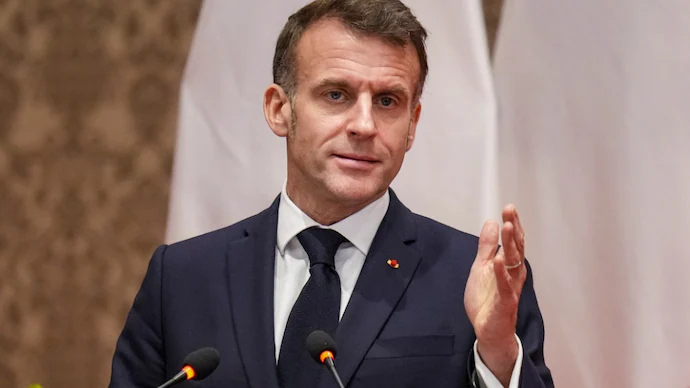
That tension came into sharper focus when French President Emmanuel Macron dismissed certain arguments surrounding free speech as “bulls***,” signaling open frustration with what he and others characterize as absolutist interpretations of expression rights. The remark quickly circulated online, drawing sharp reactions from free speech advocates who view such language as emblematic of a broader cultural shift among political elites.
Over the past several years, governments in Europe and North America have advanced legislation aimed at combating “misinformation,” “disinformation,” and “hate speech.” Proponents argue these measures are necessary in the digital age, where false narratives can spread globally within minutes and where online rhetoric can spill into real-world harm. Critics, however, see a more troubling pattern — one in which the definitions of harmful speech expand over time, often encompassing dissenting political viewpoints.
So under Macron’s model, who PRECISELY gets to determine what speech is ‘hateful’ and what speech isn’t?
All such speech controls invariably become politicized weaponry aimed at silencing valid criticism of the party in power.
— That Guy, Fawkes (@ThatF95046) February 18, 2026
The debate is not abstract. It touches social media moderation policies, content removals, algorithmic suppression, and, in some countries, criminal penalties for certain forms of expression. Advocates of stricter regulation contend that unchecked speech enables extremism and harassment. Opponents counter that broad censorship frameworks inevitably concentrate power in the hands of governments, tech executives, and regulatory bodies — entities that are not politically neutral.
Another flashpoint in the debate is anonymity online. Calls to eliminate anonymous accounts are often framed as efforts to reduce harassment and foreign interference. Yet critics argue anonymity has historically protected whistleblowers, dissidents, and ordinary citizens who fear professional or social retaliation. The removal of anonymity, they warn, can create chilling effects, discouraging lawful speech simply because individuals fear consequences from employers, institutions, or authorities.
Free Speech is ALL speech. If the Government, and tyrants like French moron Macron, get to decide what ‘speech’ is allowed and not allowed, they will ALWAYS choose the ‘speech’ that supports government and silence the speech that questions government. https://t.co/SXa9cIf47K
— Rob Schneider 🇺🇸 (@RobSchneider) February 18, 2026
Underlying these disputes is a philosophical divide. Is speech a fundamental right that must be protected even when it offends, unsettles, or contradicts prevailing social norms? Or is speech a conditional privilege that can be curtailed when it is deemed socially harmful?
In the United States, the First Amendment provides unusually strong protections compared to many Western democracies. Courts have repeatedly upheld the principle that even offensive or controversial speech is generally protected from government restriction. That constitutional framework stands in contrast to parts of Europe, where speech laws are more restrictive and enforcement mechanisms more robust.

This is the European attitude to free speech. It’s why there’s currently a push to de-anonymise social media. https://t.co/RJ6rOG7OYh
— Keith Redmond (@ExCllrRedmond) February 18, 2026
As digital platforms become the primary arenas of public discourse, the stakes continue to rise. Decisions about moderation, verification, and identity policies shape not only online conversation but the broader civic landscape.