

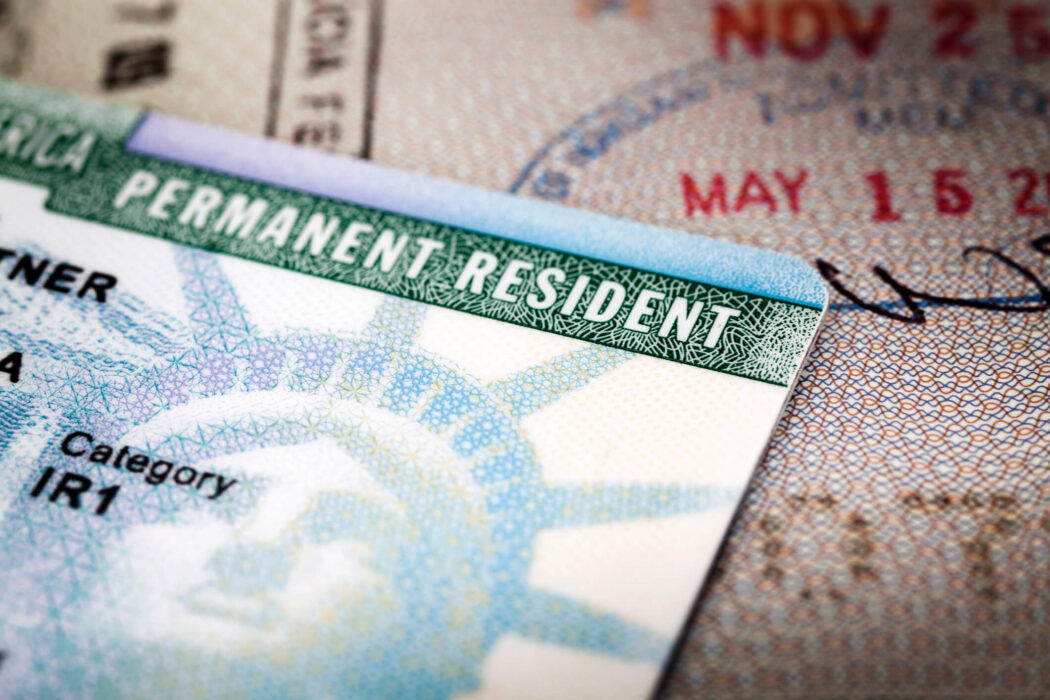

The long-simmering debate over immigration policy is once again coming to a head — this time over the Trump administration’s latest move to redefine the term “public charge,” a bureaucratic phrase with sweeping consequences.
More than 125 Democratic lawmakers are sounding the alarm, demanding that the Department of Homeland Security withdraw a proposed rule that could give immigration officers dramatically expanded power to deny green cards to individuals who have used public assistance.
At the center of the controversy is a Trump-era push to undo the 2022 Biden administration policy that had reinstated a more restrained, decades-old definition of “public charge.” That definition limited the term to those who were “primarily dependent” on government aid, specifically cash assistance or long-term institutional care at the government’s expense. Crucially, it did not include widely used non-cash benefits like Medicaid or SNAP (food stamps), which many immigrant families rely on — including families with U.S. citizen children.
The Trump administration now wants to replace that clarity with something far more nebulous. Under the proposed rule, DHS would eliminate the formal definition of a public charge altogether. This means immigration officers would no longer be constrained by the “primarily dependent” test. Instead, they’d be free to consider a wide variety of factors — and potentially a broader array of benefits — when deciding whether an applicant might become a public charge “at any time.”
Democrats see this as a return to a dangerously subjective standard. Rep. Adriano Espaillat, chair of the Congressional Hispanic Caucus, warned the rule would punish families for seeking essential help — food, health care, education — and would cause a chilling effect that could deter eligible immigrants from accessing benefits entirely.
That fear is not unfounded. During the previous Trump administration, similar rules caused a sharp decline in immigrant use of programs they were legally entitled to, even among groups like refugees or survivors of domestic violence, who were technically exempt.
The current proposal, critics argue, invites confusion and arbitrary enforcement. In formal comments submitted to DHS, lawmakers warned that removing any clear definition of “public charge” leaves immigration officers without meaningful guidance, and risks retroactively punishing families for conduct that was once lawful and explicitly permitted. “Families seeking adjustment of status,” they wrote, “cannot navigate a system where the rules shift without warning.”

Even lawmakers like Rep. Jamie Raskin and Sen. Dick Durbin — hardly firebrands — have taken issue with the move, reminding DHS that the term “public charge” has, since 1882, always referred to someone primarily dependent on the state, not someone who simply used benefits in times of need.
The stakes are immense. At its core, this policy fight is not just about green card applications — it’s about who gets to belong, and under what terms. If the Trump administration finalizes this rule, millions of families could be forced into an impossible choice: forgo help for their U.S. citizen children or risk jeopardizing their future immigration status.