

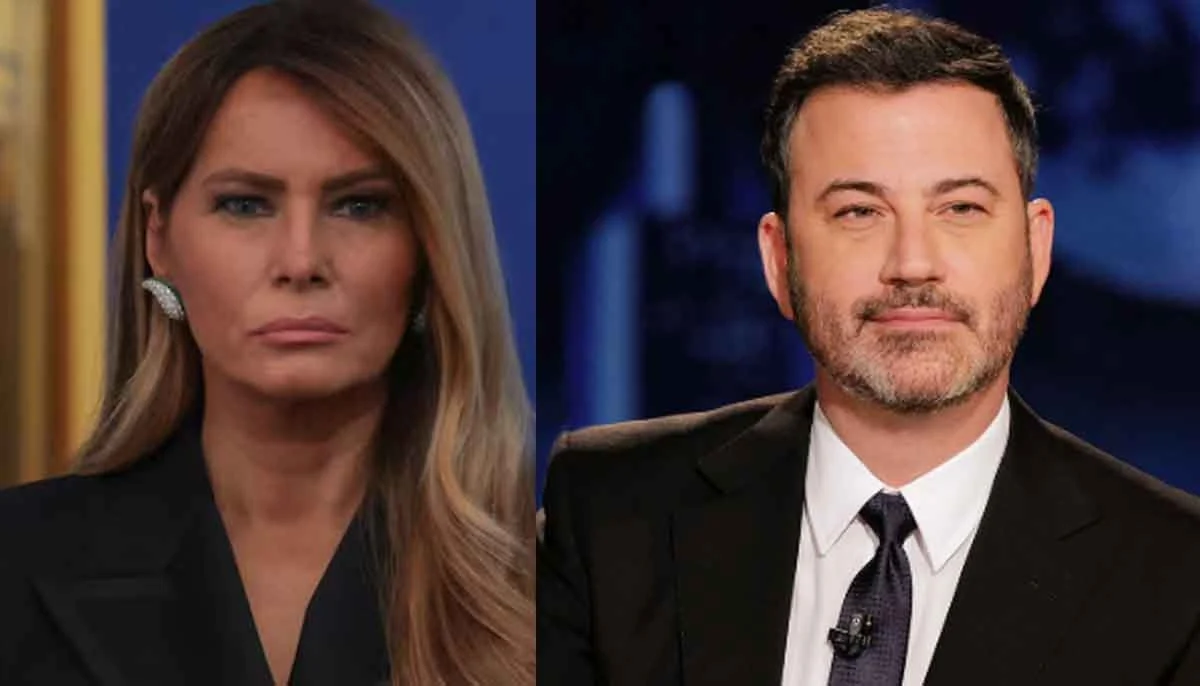

The latest late-night segment from Jimmy Kimmel didn’t land as a harmless jab or even a routine political roast—it veered into territory that raises questions about where the line is supposed to be.
Kimmel, who has built a long career shifting between crude humor and polished monologues, used his mock version of the White House Correspondents’ Dinner to take aim at First Lady Melania Trump and her son Barron in a way that felt less like satire and more like a calculated provocation.
During the segment, Kimmel introduced Melania with a remark that framed her as “an expectant widow,” a line that drew attention not just for its harshness but for its implication. It’s one thing to poke at public figures over policy, image, or even personality quirks. It’s another to center a joke on the idea of a president’s death, particularly in a climate where political tensions already run high and security concerns are not abstract.
Kimmel’s defenders might argue that late-night comedy has always pushed boundaries, that it thrives on discomfort, and that no public figure is off-limits. But critics point to a pattern in his past work—moments that leaned on shock value rather than wit, from earlier controversial sketches to more recent political commentary that often blurs the line between satire and hostility.
The timing of this particular segment added another layer. It aired just days before the real White House Correspondents’ Dinner, an event that already carries heightened security due to the presence of top political figures.
That context makes jokes centered on harm or death feel less detached, even if the intent is framed as comedy.
What stands out is the contrast between Kimmel’s willingness to deliver cutting, personal attacks and his reactions when he becomes the target. Past instances—whether involving public figures like Aaron Rodgers or broader criticism—have shown a far more defensive posture.

That imbalance fuels the perception that the rules of engagement shift depending on who holds the microphone.
Late-night television has long operated as a space where politics and entertainment collide. Hosts shape narratives, influence tone, and often reflect the mood of their audience. But moments like this highlight how quickly that influence can tip from sharp commentary into something more abrasive, where the joke itself becomes secondary to the reaction it provokes.