

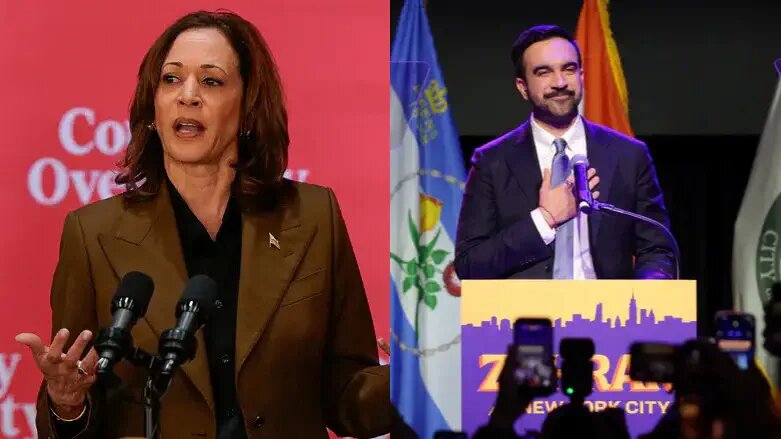

Kamala Harris and Zohran Mamdani: A New Political Alliance
Kamala Harris, the former Vice President of the United States, has been making strategic moves to strengthen her political base. One of her latest efforts involves forming a close alliance with Zohran Mamdani, the mayor of New York City. According to The New York Post, the two had an extended private phone call focusing on the future of the Democratic Party.
This call came just two days after Mamdani's endorsed candidates won three New York congressional primaries, defeating two incumbents. It's clear that Harris sees Mamdani as a key player in the progressive wing of the party. Harris has also been exchanging text messages with Mamdani in recent months, as reported by reports.
Harris's Outreach to Progressive Democrats
Harris's outreach to Mamdani is part of a broader strategy to build support among progressive Democrats. She met with Rep. Alexandria Ocasio-Cortez at the "Power Rising" conference in Chicago, further solidifying her ties with the party's left wing. According to Axios, Harris has also been reaching out to pro-Palestinian activists, including Abbas Alawieh, a co-founder of the Uncommitted Movement.
Alawieh met with Harris in Detroit after multiple phone calls, where they discussed issues related to U.S. support for Israel. Alawieh shared his concerns about the impact of Israeli airstrikes on his community, stating, "In my first call with VP Harris, I shared with her that several community members in the Michigan State Senate district I’m running to represent have had family recently killed in Israeli airstrikes with support from our American government, and that my 91-year-old grandmother’s home was destroyed as well."
The Impact on Everyday Americans
Harris's strategic moves to form alliances with progressive leaders like Mamdani and Alawieh raise important questions about the direction of the Democratic Party. For conservative Americans, this shift could mean a more left-leaning agenda that prioritizes issues like income inequality, climate change, and social justice. While these issues are important, they often come with higher taxes and increased government spending, which can burden middle-class families.
Mamdani confirmed the call and stated, "The [former] vice president reached out to have a conversation, and we’ve had a brief conversation. We’ve been in touch over the last few months, and I really do appreciate her outreach." This level of engagement suggests that Harris is serious about building a strong base for a potential 2028 White House run.
For everyday Americans, this means that the political landscape is shifting, and the choices in the next election may be more polarized. It's crucial for voters to stay informed and engaged to ensure their voices are heard.

Context: The Democratic Party's Leftward Shift
The Democratic Party has been moving to the left in recent years, with younger and more progressive leaders gaining influence. Figures like Alexandria Ocasio-Cortez and Zohran Mamdani represent a new generation of Democrats who are pushing for bold policy changes. Harris's outreach to these leaders is a clear signal that she is positioning herself to lead this movement.
This shift has implications for a wide range of issues, from healthcare and education to foreign policy and national security. For conservative Americans, it's important to understand how these changes could affect their daily lives and the future of the country.
Key Takeaways
- Kamala Harris is forming a close alliance with NYC Mayor Zohran Mamdani to strengthen her base among progressive Democrats.
- This move signals her preparation for a potential 2028 White House run.
- The Democratic Party's leftward shift could lead to policies that affect middle-class Americans.
Frequently Asked Questions
Why is Kamala Harris forming alliances with progressive leaders?
Harris is building a strong base for a potential 2028 presidential run by aligning with progressive leaders who can help shape the Democratic Party's agenda.
How might this impact the average American?
A more left-leaning Democratic Party could lead to policies that increase taxes and government spending, which may affect middle-class families.
What does this mean for the 2028 election?
The 2028 election may see a more polarized political landscape, with Harris representing a progressive wing of the Democratic Party.