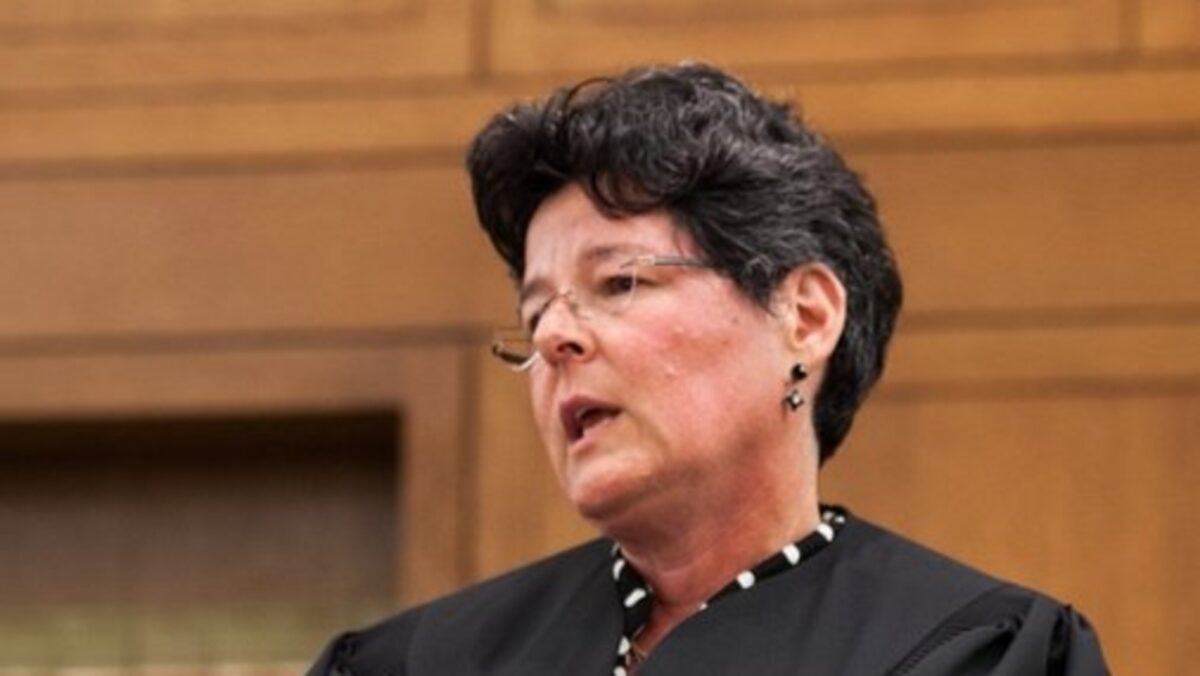

A federal courtroom in Massachusetts has once again become the staging ground for a broader fight over immigration authority, this time centered on whether a sitting president can unwind policies put in place by his predecessor. The ruling, issued by U.S. District Judge Allison Burroughs, blocks an effort by Donald Trump to terminate a Biden-era program that granted temporary legal status to large numbers of migrants who entered the country through a mobile application system.
Ah, yes.
The constitutionally-mandated ability for illegal immigrants to enter via a haphazard cellphone app instituted by executive order.
The judiciary is dead. And it was a suicide. https://t.co/x2GmxlFPKB
— Bonchie (@bonchieredstate) April 1, 2026
The program itself allowed prospective migrants to submit information digitally and receive authorization to enter the United States under a form of parole. It was one of several mechanisms the Biden administration used to manage border intake without relying solely on physical crossings. Critics argued it functioned as a workaround to traditional immigration limits, while supporters framed it as an orderly processing tool.
Biden badly misused immigration parole, using it unlawfully to bring millions of migrants into the U.S.
A federal judge has now told Trump he can’t reverse Biden’s unlawful use of this narrow authority.
It’s all so upside down. https://t.co/LVOS4G1z7E
— Mike Lee (@BasedMikeLee) March 31, 2026
Trump’s move to end the program was presented by his allies as a straightforward reversal—part of a broader push to tighten border controls and dismantle policies they viewed as overly permissive. A Department of Homeland Security spokesperson described the rollback as fulfilling a commitment to prioritize national security and reassert control over entry procedures.
BREAKING: Obama appointed U.S. District Judge Allison Burroughs just ruled the Trump administration must restore the legal status of potentially close to a million migrants who came into our country through the Biden-era CBP One App pic.twitter.com/78gv67cH9Y
— Libs of TikTok (@libsoftiktok) April 1, 2026
Judge Burroughs saw it differently. Her decision effectively halts that rollback, concluding that the administration does not have the authority, at least in this instance, to summarily revoke the legal status granted under the prior framework. While the ruling does not resolve the underlying policy debate, it freezes the status quo and ensures that the program remains in effect for now.
In Boston, Judge Burroughs rules that Trump unlawfully terminated the legal status of tens of thousands of migrants who had been allowed to temporarily live and work in the US if they announced their presence using an app introduced by Biden. @ZJMontague https://t.co/5scyQoXE1u https://t.co/G6we8M03G2
— Peter Baker (@peterbakernyt) March 31, 2026
This marks the third time in a single day that a Trump-backed initiative has been struck down in court, a pattern that underscores how quickly executive actions can become entangled in legal challenges. Each ruling adds another layer of delay, shifting the battleground from policy announcements to judicial interpretation.
🚨 Meet activist Judge Allison Burroughs, she just ruled President Trump must restore 900,000 MIGRANTS' legal status who were told to leave through the CBP Home App.
Congress MUST act and remove these political hacks. pic.twitter.com/3mtRG87iDh
— Gunther Eagleman™ (@GuntherEagleman) April 1, 2026
What remains unsettled is the larger constitutional question hovering over the case: how far executive authority extends when one administration attempts to dismantle the legal constructs of another. Immigration policy, long shaped by a mix of congressional statutes and executive discretion, continues to test those boundaries.
For now, the immediate outcome is narrow but significant. The migrants who entered under the app-based system retain their status, and the administration seeking to remove that status must either appeal or find an alternative legal path. The courtroom, not the border, is where the next phase of this fight will unfold.