

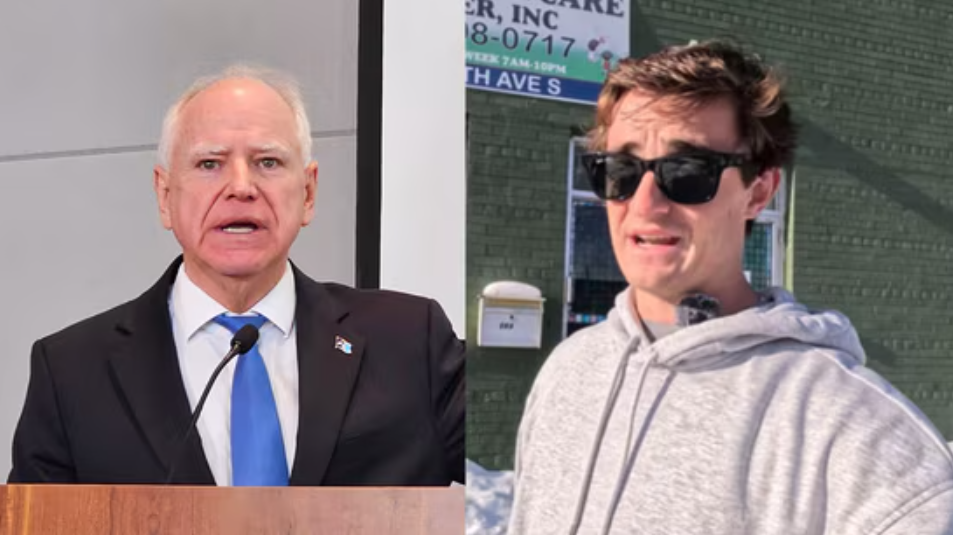

What began as a quietly published exposé from independent journalist Nick Shirley has now exploded into a full-blown national scandal — and, perhaps more notably, a digital phenomenon. Shirley’s video investigating suspicious Minnesota day care centers has surged toward 100 million views, a staggering number that reflects not just virality but deep public concern. When one video prompts this kind of engagement, it isn’t entertainment — it’s outrage.
The content is simple, but effective. Shirley visits child care centers receiving public funds. He finds locked doors, evasive individuals, and in one ironic moment, a sign that spells “learning” as “learing.” But what really captured viewers’ attention wasn’t the typo — it was what was missing: children. The institutions, many of which have reportedly received taxpayer money, appeared eerily empty.
And then comes the question that millions of viewers are now asking: Where did the money go?
The video hit at a moment when Minnesota is already under a growing federal spotlight. The Feeding Our Future fraud case — involving the theft of $250 million in pandemic relief funds — had already shaken confidence in the state’s oversight mechanisms. That case led to 78 indictments and 57 convictions. Now, with Shirley’s reporting suggesting another possible fraud network, the concern isn’t isolated — it’s systemic.
Even more troubling, Secretary of the Treasury Scott Bessent has confirmed his office is actively investigating claims that some of this money may have been funneled overseas, potentially even to terrorist organizations. And FBI Director Kash Patel has disclosed that the Bureau is surging assets into Minnesota — an unusually public signal that more indictments may be on the horizon.
All of which puts Governor Tim Walz in an increasingly untenable position.
Walz’s attempt at damage control came in the form of a cheery Sunday post listing rankings meant to reassure Minnesotans of the state's supposed excellence:

#8 state for safety.
#5 state to live in.
#3 state for jobs.
#2 state to raise a family, and #2 state to retire.
We’ve made progress, but there’s more to do to deliver security, opportunity, and freedom to every Minnesotan. I won't quit fighting until we're #1. pic.twitter.com/oRaKRvgN9N
— Tim Walz (@Tim_Walz) December 28, 2025
But the replies came fast and merciless, with users — including activist Scott Presler — calling out the administration for what appears to be a failure of oversight and accountability. This wasn’t just a bad news cycle. It was a reputational collapse in real time, driven not by partisan media, but by one independent journalist and tens of millions of ordinary Americans sharing his findings.
Minnesota’s economy doesn’t work without child care providers – so we’re giving them a raise.
— Governor Tim Walz (@GovTimWalz) October 20, 2023
What’s particularly devastating for Walz is the paper trail. His past statements about expanding funding for child care centers — once used as political capital — now read more like foreshadowing. At best, they reflect misplaced priorities. At worst, they suggest negligent governance.
#1 in Learing
— ThePersistence (@ScottPresler) December 28, 2025
And Walz isn’t just a local player. He’s floated as a potential vice presidential pick for Democrats. That fact alone will raise national interest in how he handles this crisis — and whether his past decisions played a role in allowing it to flourish. Right now, he’s giving voters every reason to look elsewhere.
Don’t forget #1 for fraud https://t.co/0rjkz6VVcT
— Nick shirley (@nickshirleyy) December 28, 2025
Yes, California may have its own reckoning ahead — and no one’s denying the scale of fiscal mismanagement in other deep-blue states. But Minnesota, at this moment, stands as the most high-profile example of federal dollars disappearing under the cover of crisis — and public officials trying to change the subject rather than confront the failures.