

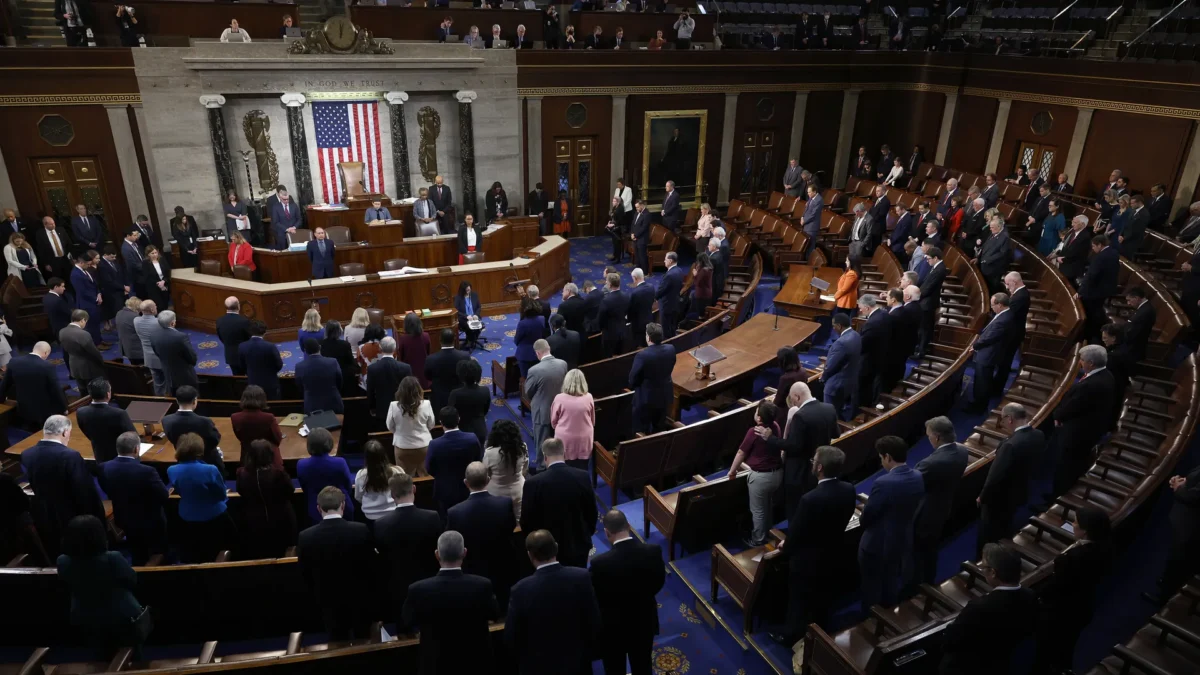

The House of Representatives forced every member to answer a simple question on Wednesday: Should members of Congress and their immediate families face new restrictions on buying and selling individual stocks?
The answer split almost entirely along party lines.
The Stop Insider Trading Act passed the House by a vote of 231-198. Every vote against the legislation came from Democrats, putting the entire caucus on record opposing the measure despite years of public criticism over congressional stock trading.
The vote quickly gained attention online, particularly because the issue has long been associated with former House Speaker Nancy Pelosi, whose family's stock trades have repeatedly fueled calls for tighter ethics rules in Washington. While the House bill would not require lawmakers to sell investments they already own, it would prohibit future purchases of individual stocks after the restrictions take effect for members of Congress, their spouses, and dependent children.
Under the legislation, lawmakers choosing to sell existing holdings would have to provide advance public notice between seven and 14 days before completing the transaction. The disclosure would include the anticipated sale date, the nature of the transaction, and the number of shares involved. That information would then be published through the House clerk or Senate secretary, giving the public an opportunity to review planned sales before they occur.
The bill also establishes financial penalties for violations. Anyone purchasing stock in violation of the law would face a fine of at least $2,000 or 10 percent of the transaction value, whichever is greater, along with forfeiting any profits earned from the unlawful trade. Any improperly acquired stock would also have to be sold.
Republican Rep. Bryan Steil of Wisconsin, who introduced the legislation, argued that the proposal is intended to restore public confidence in Congress.

"I believe this is our opportunity where we can simply stop members of Congress from trading individual stocks. Period. Full stop," Steil said during House debate. "Doing so removes even the appearance of wrongdoing. Americans should be confident that individuals working here are working on their behalf, not on behalf of their own financial interests."
The legislation includes several exceptions. Diversified mutual funds, certain trusts, small business interests, and automatic dividend reinvestment programs would remain permissible. Spouses and dependent children could also continue making certain covered trades when those transactions are directly tied to their primary occupation. If enacted, the restrictions would take effect 180 days after becoming law.
Breaking: The House just passed a Congressional Stock Trading Ban
• 217 Republicans voted in support
• 198 Democrats voted againstThe bill now goes to the Senate pic.twitter.com/T9a6VIgG9M
— Nancy Pelosi Stock Tracker ♟ (@pelositracker) July 22, 2026
Democrats argued they were not opposing the concept of congressional stock reform itself but objected to the bill's structure. They criticized the legislation for allowing lawmakers to keep their existing investments rather than requiring divestment and faulted it for excluding the president and vice president from the restrictions.

Many Democrats also objected to Republican leadership attaching federal voter identification requirements to the bill. Rep. Joseph Morelle of New York, the ranking Democrat on the House Administration Committee, called the voter ID language a "poison pill" and accused Republicans of combining two unrelated issues by incorporating provisions from the SAVE America Act.
The Congressional Black Caucus similarly urged members to reject the legislation, describing it as a "Trojan horse" for voter suppression.
Those objections explain why many Democrats said they voted against the bill. They do not change the final roll call. When the legislation reached the House floor, every Democratic "no" vote also counted against restrictions on future congressional stock purchases and against requiring lawmakers to disclose planned stock sales before they happen.
Current law under the STOCK Act generally requires lawmakers to report many stock trades within 45 days after the fact. The House proposal would shift part of that disclosure process forward, requiring advance notice before a sale is completed and giving watchdogs and the public an opportunity to monitor those transactions in real time.
A broader proposal introduced by Sen. Josh Hawley of Missouri would go much further. His legislation would require members of Congress, the president, the vice president, and their immediate families to divest individual stock holdings altogether. Although Hawley's bill advanced through a Senate committee in July 2025, it has yet to receive a floor vote.
Even so, Hawley did not oppose the House legislation.
"It's not nearly as robust as I would like — but something is better than nothing," he said.
Whether the House bill survives in the Senate remains uncertain, especially with the voter ID provisions attached. But one fact is no longer in dispute. Every House member has now cast a recorded vote, and when presented with legislation that would impose new limits on congressional stock trading, 198 Democrats voted no.