

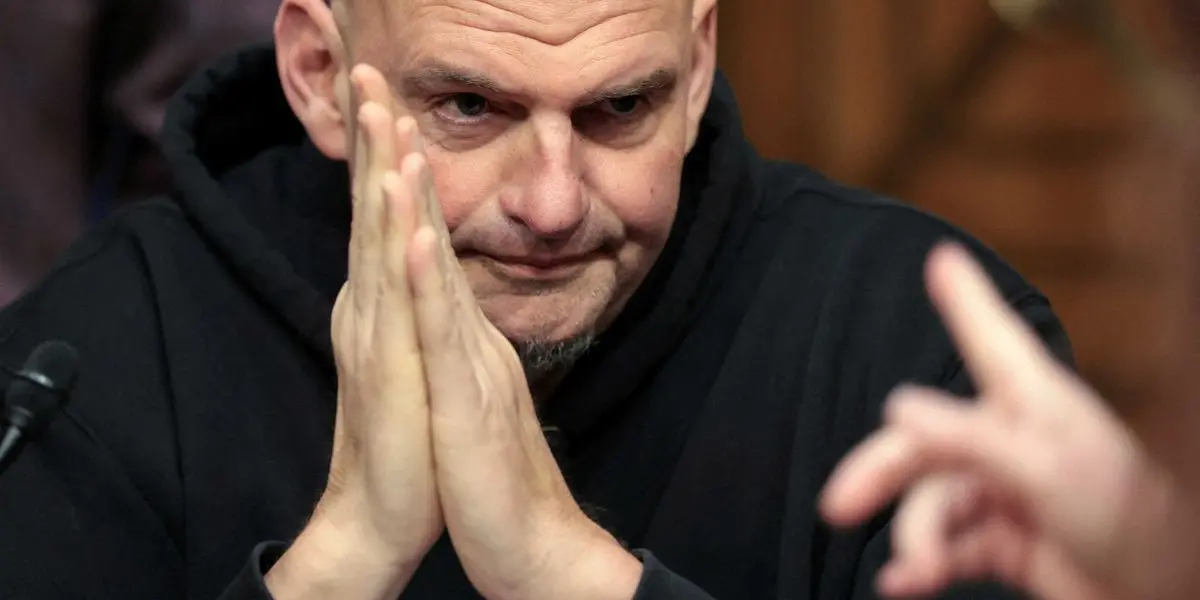

The Democrat Party heads into the 2026 midterms facing a problem it still refuses to fully confront: why so many working-class voters across Pennsylvania, Michigan, Wisconsin, and the broader Rust Belt abandoned the party for Donald Trump — not once, but twice. Instead of reassessing the policies and cultural messaging that pushed those voters away, much of the party’s activist wing appears more focused on ideological enforcement, internal loyalty tests, and public displays of resistance to anything associated with Trump.
Sen. John Fetterman’s latest op-ed may be one of the clearest signs yet that at least some Democrats recognize the problem.
Fetterman’s Thursday piece, titled “I haven’t changed. Here’s what has,” reads less like a defense of himself and more like an indictment of where the modern Democrat Party has drifted. His central argument is simple: the positions now getting him attacked inside his own party were mainstream Democrat views not very long ago.
He points specifically to border enforcement, government funding, and support for Israel.
Fetterman backed the Laken Riley Act, legislation named after a Georgia nursing student killed by an illegal immigrant. He also supported a bipartisan border reform bill in 2024 and voted against using government shutdown threats as leverage against the Trump administration.
“The demand to keep the lights on weighed more heavily than partisan games,” he wrote.
On foreign policy, he has consistently backed Israel during its war against Hamas and even praised aspects of the Trump administration’s posture toward Iran — positions that, until recently, would not have been especially controversial among Democrats.

Now they are.
“These once-common views have become increasingly toxic in the Democratic Party, a result of catering to the fringe and agitated parts of our base,” Fetterman wrote.
The reaction from within his own party only reinforced his point.

Democrat National Committee Vice Chair Malcolm Kenyatta publicly called Fetterman “a mess” after the senator mocked reflexive anti-Trump opposition. Local Democrat organizations in Pennsylvania escalated even further. The Monroe County Democrat Party labeled him a “traitor” after he declined to completely rule out supporting Florida Gov. Ron DeSantis for a Trump cabinet role. Another county party chair called for his resignation after he supported some Trump nominees.
Fetterman’s response was blunt.
“Plus, I’d be a terrible Republican who still votes overwhelmingly with Democrats.”
That part matters. Fetterman is still firmly left on many issues. He remains pro-choice, pro-labor, pro-LGBT, and supportive of federal assistance programs like SNAP. His voting record still aligns overwhelmingly with Democrats. But even mild deviations from activist orthodoxy now seem enough to trigger outrage inside parts of the party apparatus.
Meanwhile, Republicans have noticed.
Sen. Dave McCormick said he would “welcome” Fetterman and described their relationship as built on “real trust.” Pennsylvania GOP Chairman Greg Rothman even suggested Republicans could potentially support Fetterman in the future if he ever switched parties.
By contrast, Democratic responses have often sounded tense and defensive. Pennsylvania Gov. Josh Shapiro’s remark that Fetterman should “reflect the will of the people” stood out because the criticism came after Fetterman supported keeping the government funded and backed a longtime U.S. ally.
Fetterman’s op-ed did not announce a party switch. It did something potentially more damaging for Democrats: it documented, in plain language, how disconnected parts of the party have become from positions that were once ordinary Democrat politics.