

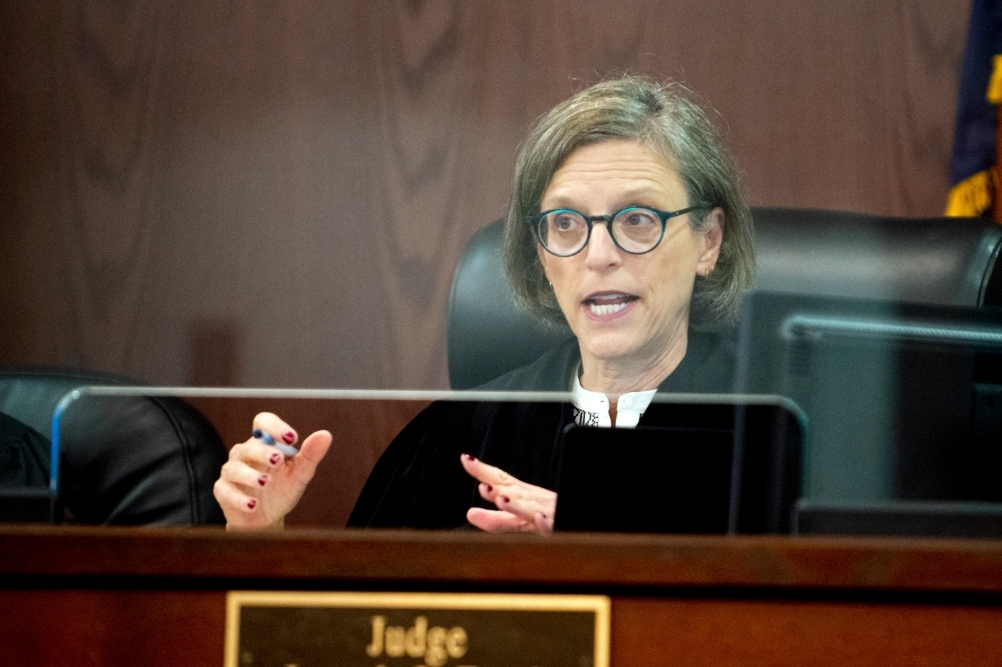

The U.S. justice system’s credibility took a serious blow this week after newly surfaced court records revealed that U.S. District Judge Judith Levy—appointed by President Obama—praised a serial illegal immigrant convicted of raping a woman with cerebral palsy, even as federal prosecutors pleaded for a tougher sentence. The case, already tragic and disturbing in its details, has now become a flashpoint in the national debate over immigration, criminal justice, and judicial priorities.
Edys Renan Membreño Díaz, a 30-year-old Honduran national, illegally entered the U.S. not once, but seven times. His criminal record culminated in a violent sexual assault: dragging a cognitively impaired woman into the laundry room of her Michigan apartment complex, where he raped and sodomized her.
In 2022, he was sentenced to 6 to 15 years in state prison for that attack. On top of that, federal prosecutors sought an additional two years for illegal reentry—a relatively routine request given his repeated violations of immigration law.
Unspeakable Depravity.
Edys Renan Membreño Díaz, a criminal illegal from Honduras who illegally entered our country 7 times, was convicted of raping and sodomizing a woman who has cerebral palsy and cognitive delays. He attacked her and dragged her into her apartment building’s… pic.twitter.com/wrsMcP2jDE
— Tricia McLaughlin (@TriciaOhio) December 13, 2025
But what unfolded in Judge Levy’s courtroom was anything but routine. Rather than impose the extra time requested by the government, she praised Membreño Díaz. She called him a “model immigrant” and “an ambassador for living up to our immigration restrictions.” This, about a man whose primary experience with immigration law has been defiance of it—crossing the border illegally seven times and sexually assaulting one of the most vulnerable members of society.
Federal prosecutors were stunned. Assistant U.S. Attorney Meghan Sweeney Bean called the sentence “substantively unreasonable,” noting that the judge appeared to reward Díaz for his repeated illegal entries by framing them as evidence of “family devotion” and a willingness to perform jobs Americans supposedly refuse. She added, tellingly, that the judge gave “virtually no weight to his violent sex crimes.”
The outrage was swift. Assistant Homeland Security Secretary Tricia McLaughlin called Levy’s praise “unspeakable depravity,” and many across the political spectrum are now questioning how a federal judge could justify minimizing the immigration consequences of such a heinous act.
The man in question could now walk free as early as July 2028—a full two years earlier than prosecutors had hoped. The government is appealing the sentence, but the damage is already done. Judge Levy’s comments didn’t just spark a legal dispute; they reignited a moral one.

The court is supposed to be the place where justice speaks with clarity and moral seriousness. But in this case, justice did not speak—it equivocated. And when it comes to protecting society’s most vulnerable, that is simply not enough.