

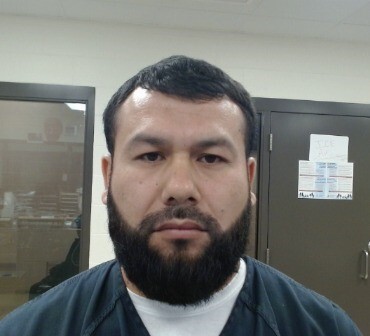

The revelation that an alleged terrorist slipped into the United States, lived here for more than a year, obtained a commercial driver’s license, and was driving 18‑wheelers across American highways reads like the opening scene of a national‑security briefing gone terribly wrong. Yet according to new disclosures from the Department of Homeland Security, that’s exactly what happened.
Federal officials confirmed Monday that Akhror Bozorov, a 31‑year‑old Uzbek national with an active Interpol warrant for distributing terrorist propaganda and recruiting jihadists, was pulled over by local authorities on November 9. What should have been a routine traffic stop quickly escalated into something far more alarming. Once authorities ran his information, the red flags lit up. ICE agents took him into custody soon afterward.
The details of how Bozorov got here — and how he remained here — paint a troubling picture of systemic strain at the border.
He crossed illegally into California in 2023, during a period when Border Patrol agents, overwhelmed by record surges, were under pressure to process and release migrants at unprecedented speed. His foreign warrant, issued a year before he arrived, went undetected. There simply wasn’t enough time for deeper vetting.
But the story didn’t stop at his release. In 2024, the Biden administration granted Bozorov a work permit, a move that likely paved the way for his Pennsylvania‑issued commercial driver’s license. By the time authorities caught up with him, he wasn’t just living in the country — he was hauling cargo across state lines.
The response from DHS officials was swift — and blistering. Assistant Secretary Tricia McLaughlin condemned both the Biden administration and Pennsylvania’s licensing policies, saying, “This should go without saying, but terrorist illegal aliens should not be operating 18‑wheelers on America’s highways.”
She cast the situation as part of a broader failure to control who enters the country, adding that Border Patrol had been forced into a posture where meaningful vetting often became impossible.

The concerns extend beyond Bozorov. U.S. intelligence officials have warned for years that ISIS‑linked smuggling networks have facilitated the entry of migrants from Uzbekistan and other Central Asian nations into the U.S., often exploiting periods of high border congestion.
Acting ICE Director Todd Lyons framed the threat in stark terms, noting that federal authorities cannot know what an unvetted driver may be transporting across the country. In his words, “Terrorists will stop at nothing to harm the United States... it is well within the realm of possibility that some of these trucks could be carrying toxic chemicals, bombs, or God knows what.”