

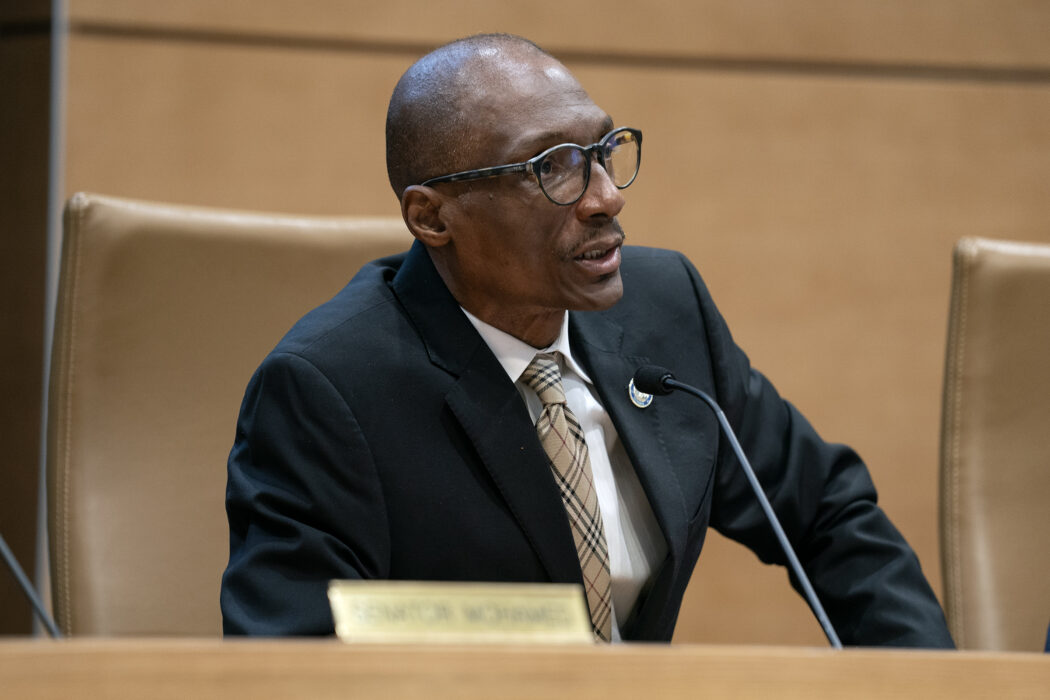

Minnesota State Senator Bobby Joe Champion stepped squarely into controversy this week after offering a startling defense of a violent confrontation involving a federal immigration officer. What might have been an opportunity to urge calm or emphasize the rule of law instead became a moment that sharply illustrated the widening gap between political rhetoric and plain reality.
The incident itself was not ambiguous. An Immigration and Customs Enforcement agent was attempting to apprehend a suspect believed to be Venezuelan when the situation escalated. Two additional individuals intervened, joining the suspect in assaulting the agent.
One of them, according to reports discussed on air, was armed with a shovel. This was not a misunderstanding, nor a peaceful protest gone awry. It was a physical attack on a federal law enforcement officer in the course of his duties.
🚨 State Sen. Bobby Joe Champion (D) says last night's vicious assault of an ICE agent "is just an example of Minnesota being a place where we help our neighbors."
CNN: If they used weapons to attack the officer, would that change your opinion?
Champion: "Actually, no."
SICK! pic.twitter.com/eWO8fPJzpl
— Rapid Response 47 (@RapidResponse47) January 15, 2026
Yet when Champion appeared on CNN with Laura Coates, his framing of the event was strikingly detached from the basic facts. Rather than condemning the assault, Champion described it as an example of Minnesotans “helping our neighbors.”
He went further, asserting that ICE agents—more than two thousand of them, by his count—had been “attacking and terrorizing” the state. In that framing, the agent was no longer a victim of violence, but a provocateur whose presence justified the response.
Pressed by Coates on whether the use of weapons such as shovels or brooms would alter his view, Champion’s answer was unequivocal. It would not. From his “vantage point,” the priority was ensuring that Minnesotans were being treated “properly,” with respect and fairness. The implication was clear: even if improvised weapons were used against an ICE officer, responsibility lay not with the attackers, but with the federal agency itself.
Champion repeatedly accused ICE of acting “illegally,” of being aggressive, and of “misbehaving,” while offering no specific legal findings or evidence to support those claims. The surge of federal agents, he argued, had only made matters worse, escalating tensions and creating what he described as a tragedy and a travesty.

In moments like this, words matter. Champion’s defense did not de-escalate, clarify, or contextualize. Instead, it normalized a dangerous idea—that violence against federal officers can be excused if the politics align. For a sitting state senator, that message carries consequences far beyond a single television interview.