

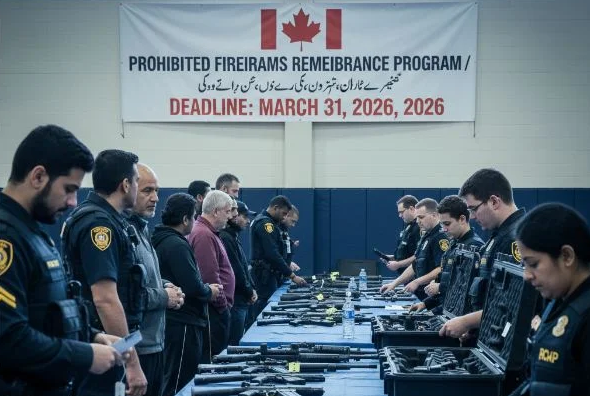

Hundreds of thousands of Canadian gun owners now find themselves caught in a legal paradox that is testing the limits of Canada’s bureaucratic capacity and political will.
At the center of the controversy is the federal government’s so-called “assault-style firearms compensation program,” a policy described as voluntary while carrying the threat of up to five years in prison for those who fail to comply. The result is a system that critics argue is less about public safety and more about enforcing a sweeping ban on law-abiding citizens through regulatory pressure.
The program traces back to a May 2020 order in council issued under then–Prime Minister Justin Trudeau, which prohibited thousands of firearms classified as “assault-style.” Unlike legislation debated and passed in Parliament, an order in council allows the federal government to enact significant policy changes without a parliamentary vote, a feature that gun rights advocates say undermines democratic accountability.
Since its rollout, the government has repeatedly extended an amnesty period for owners of newly prohibited firearms, most recently pushing the deadline to October 2026 due to widespread noncompliance and logistical hurdles.
Those hurdles are substantial. According to firearms advocates, the federal government lacks accurate data on how many of the prohibited firearms exist or where they are located. That uncertainty has translated into repeated delays and limited results.
A pilot version of the buyback program conducted in the fall of 2025 ran for six weeks and collected just 25 firearms, far short of the roughly 200 the government reportedly expected. Despite this, federal officials described the pilot as a success, framing it as a learning exercise in public communication rather than a measure of actual participation.
The government maintains that the program is not confiscatory, emphasizing that participation is technically optional. However, official guidance makes clear that compliance with the ban itself is mandatory, and that owners who neither deactivate nor surrender their firearms by the deadline face criminal liability. Compensation is also not guaranteed, with payments subject to the availability of program funds, further fueling skepticism among gun owners.

Complicating enforcement efforts is the resistance from provincial governments. Several provinces, including Alberta, Saskatchewan, Ontario, and others, have publicly stated they will not assist in administering or enforcing the program. This effectively leaves federal authorities responsible for implementation across vast geographic areas without local cooperation, increasing both the cost and complexity of enforcement.
Federal officials, including Prime Minister Mark Carney, have argued that the ban targets “assault rifles” rather than hunting or sporting firearms. Yet the presence of specific exemptions for Indigenous communities to continue using otherwise prohibited rifles for hunting highlights the breadth of the ban and raises questions about its scope and consistency.