

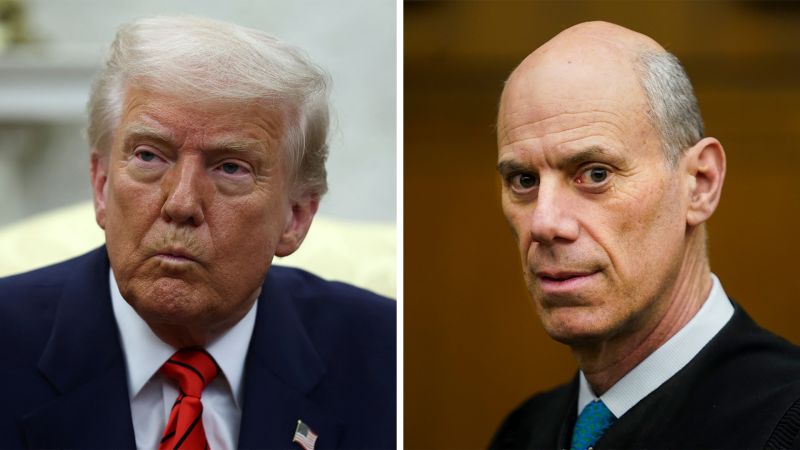

It’s not often that a ruling involving D.C. District Court Judge James Boasberg and the Trump administration breaks against expectations. His name has become closely associated with decisions that scrutinize or block administration actions, particularly in high-profile policy disputes. That pattern made last week’s outcome stand out: Boasberg ruled in favor of the administration, granting its motion to dismiss in a case tied to the transfer of illegal immigrants to El Salvador.
The case, Robert F. Kennedy Human Rights v. Department of State, centered on a diplomatic arrangement between the United States and El Salvador. Beginning in March 2025, the U.S. transferred individuals from its custody to detention facilities in El Salvador under a mutual understanding that included financial support for their confinement. Advocacy groups challenged the arrangement, arguing it violated statutory and constitutional limits while interfering with their ability to represent affected individuals.
⚖️ In Robert F. Kennedy Human Rights v. Dept. of State (removal to El Salvador), Judge James Boasberg‼️(D.C.) GRANTS admin's motion to dismiss. [3/25]https://t.co/9hY10HqMOM
— Susie Moore ⚾️🌻🐶 (@SmoosieQ) March 27, 2026
Boasberg did not dismiss those concerns outright. In fact, his ruling acknowledged the conditions described in Salvadoran prisons and the disruption to legal services cited by the plaintiffs. He accepted that the organizations experienced a form of injury, particularly in how the transfers complicated attorney-client relationships and access to counsel.
But the case ultimately turned on a narrower legal question: whether striking down the diplomatic agreement would actually resolve those injuries. Boasberg concluded it would not. He characterized the agreement as a nonbinding exchange—one that created no new legal authority and imposed no enforceable obligations. Because of that, vacating it would not prevent the government from continuing the same transfers using existing statutory powers.
That reasoning proved decisive. Even if the agreement were nullified, the underlying mechanisms—DHS removal authority and State Department funding—would remain intact. The practical outcome, as Boasberg described it, would be unchanged: both governments would still have the means and shared intent to carry out the transfers.
— Susie Moore ⚾️🌻🐶 (@SmoosieQ) March 30, 2026
With that in mind, the court found that the plaintiffs lacked standing, since the relief they sought would not meaningfully redress their alleged injuries. The motion to dismiss was granted, and the plaintiffs’ request for summary judgment was denied.
Still, the ruling did not close the door entirely. Boasberg pointed to a different legal pathway, suggesting that future challenges aimed at the government’s specific actions—such as individual removal decisions or funding mechanisms—could be viable under the Administrative Procedure Act. In other words, while this particular challenge failed, the broader legal fight may simply shift focus.

For now, though, the outcome is clear: in this instance, the administration’s position held up in court, even under a judge whose rulings have often cut the other way.