


Canada’s prairie provinces have long felt culturally and politically disconnected from the power centers of eastern Canada. Alberta, Saskatchewan, and Manitoba share far more in common with the western United States than with the urban political machinery centered in Ottawa, Toronto, and Montreal. The region is heavily tied to agriculture and energy production, values individualism, and consistently leans more conservative than much of the rest of the country. That divide has simmered for decades, but now Alberta appears closer than ever to forcing a national reckoning over its future inside Canada.
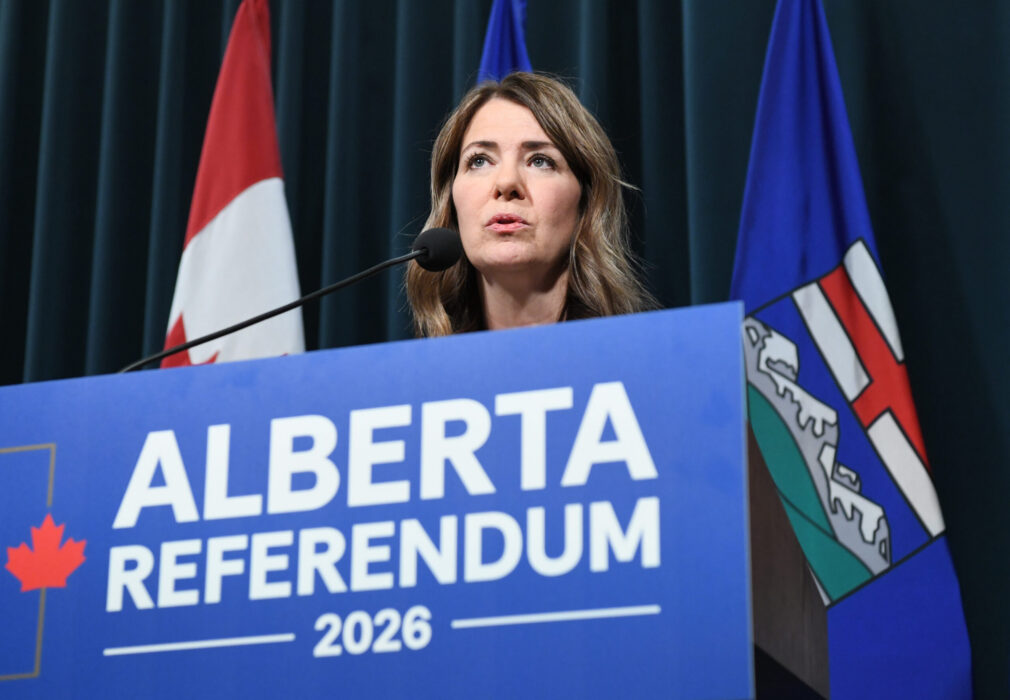
Alberta Premier Danielle Smith recently announced plans for a referendum that could determine whether the province should begin the legal process toward separation from Canada. The proposed question asks whether Alberta should remain a province of Canada or whether the provincial government should initiate the constitutional steps necessary to pursue a binding referendum on independence.
Smith herself is not campaigning for separation. She has repeatedly stated that she supports Alberta remaining within Canada and says her government holds the same position. Still, she clearly understands the level of frustration building across the province. Many Albertans believe Ottawa has spent years treating western provinces as little more than economic engines while funneling political attention and favorable policies toward Ontario and Quebec.
That resentment has only intensified amid ongoing battles over energy policy, federal regulations, and taxation. Alberta’s oil and gas industry remains one of the country’s largest economic drivers, yet many residents feel the federal government views the province less as a partner and more as a political inconvenience.
The actual process for separation would be extraordinarily difficult even if Albertans voted in favor of it. A successful referendum would trigger federal review by the House of Commons, followed by constitutional negotiations covering borders, defense, citizenship, Indigenous land issues, and division of federal assets. Any final separation would ultimately require constitutional amendments approved by Parliament and enough provinces representing a majority of Canada’s population. In practical terms, eastern Canada would hold enormous power over whether Alberta could ever legally leave.
Even so, the conversation itself matters. Alberta separatism is no longer a fringe internet fantasy. It has moved into mainstream political debate, driven by years of alienation and frustration with federal leadership.
The possibility also carries major implications for Quebec. The province has maintained its own separatist movement for generations, narrowly failing independence referendums in the past. If Alberta seriously pushes toward separation, Quebec nationalists may see an opening to revive their own ambitions.

And hanging over all of this is President Donald Trump. If Alberta ever voted to separate while Trump remained in office, few would be shocked if he publicly floated the idea of Alberta joining the United States. Trump has never exactly been shy about provocative geopolitical proposals, and the idea of adding one of the world’s richest energy-producing regions to America would instantly ignite political chaos in Ottawa.
Realistically, Alberta leaving Canada remains a long shot. Constitutional barriers are massive, and national breakups are never simple. But the fact that the discussion has reached this stage says a great deal about the growing political divide inside Canada itself. The prairie provinces increasingly see themselves as carrying the economic weight of a country whose ruling class neither understands nor respects them. Whether separation ever happens or not, that frustration is not disappearing anytime soon.