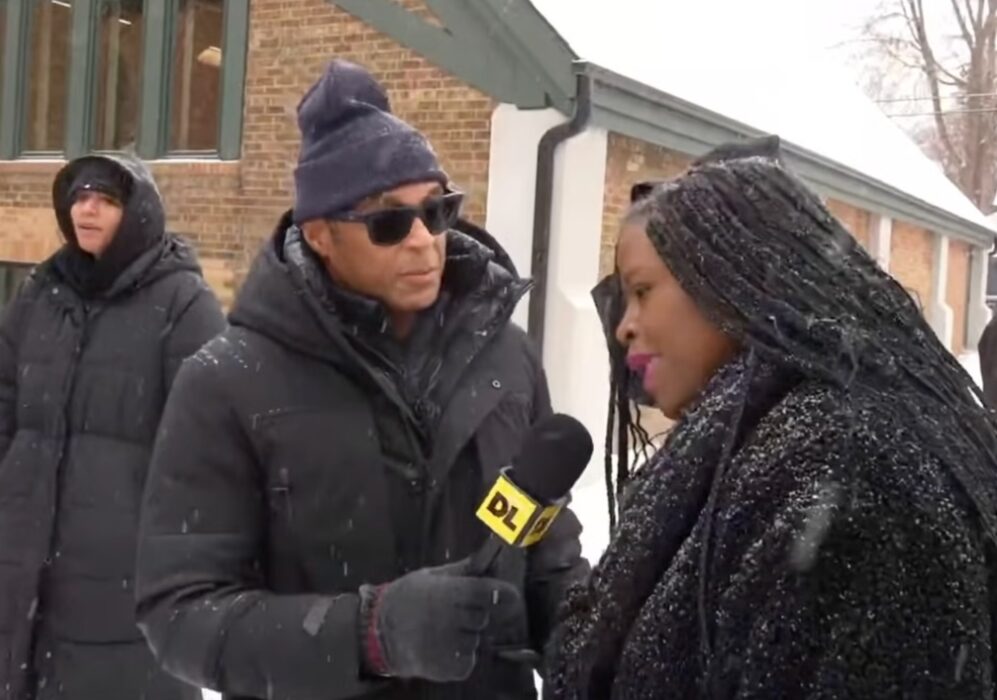

The Department of Justice has opened an investigation into the disruption of a Sunday worship service in St. Paul, Minnesota, after a coordinated group of activists—joined by former CNN host Don Lemon—stormed Cities Church in what organizers openly described as a deliberate attempt to halt religious services. The incident has quickly escalated into a national controversy, raising sharp questions about the limits of protest, the scope of the First Amendment, and the legal protections afforded to houses of worship.
According to footage and reporting from the event, dozens of protesters entered Cities Church during its Sunday service as part of what activist leader Nekima Levy-Armstrong called a “clandestine operation” designed to “disrupt business as usual.” Levy-Armstrong made the remarks during an interview with Lemon, who embedded with the group ahead of the protest, followed them into the church, and livestreamed much of the disruption. The protest lasted approximately 30 minutes and effectively shut down the service, as congregants were forced to sit through chanting and confrontation or leave altogether.
Agitators aren’t just targeting our officers. Now they’re targeting churches, too.
They're going from hotel to hotel, church to church, hunting for federal law enforcement who are risking their lives to protect Americans.
Tim Walz and Jacob Frey are responsible for whipping… https://t.co/O3WQ6Iftfe
— U.S. Immigration and Customs Enforcement (@ICEgov) January 18, 2026
Lemon, now operating an independent media platform after his departure from CNN, repeatedly defended the protesters during the event, framing the invasion of the church as a constitutionally protected act of free speech. He compared the disruption to tactics used during the civil rights movement and argued that protest, by its nature, is meant to make people uncomfortable. Clips from Lemon’s livestream spread rapidly online, drawing the attention of Assistant Attorney General Harmeet Dhillon, who leads the Justice Department’s Civil Rights Division.
Dhillon announced that her office is investigating potential violations of the federal Freedom of Access to Clinic Entrances Act, commonly known as the FACE Act. While often associated with abortion-related cases, the statute also protects the right to religious worship by prohibiting force, threats, or physical obstruction that interferes with individuals exercising their faith. Dhillon suggested that Lemon himself could face scrutiny for his role, warning that houses of worship are not public forums for protest and that neither activism nor “pseudo journalism” exempts participants from federal law.
The protest was organized by the Racial Justice Network and Black Lives Matter Minnesota. Cities Church was targeted based on activists’ claims that one of its pastors works for Immigration and Customs Enforcement, an allegation that has not been substantiated. Levy-Armstrong told Lemon that the church could not claim moral authority while allegedly “harboring” someone connected to ICE, framing the disruption as a righteous act grounded in faith and justice.
President Trump will not tolerate the intimidation and harassment of Christians in their sacred places of worship.
The Department of Justice has launched a full investigation into the despicable incident that took place earlier today at a church in Minnesota.
— Karoline Leavitt (@PressSec) January 19, 2026
Inside the church, protesters crowded the aisles chanting slogans such as “justice for Renee Good,” “hands up, don’t shoot,” and “ICE out of Minnesota,” while Lemon delivered extended monologues about constitutional rights and the purpose of protest. At one point, he acknowledged that the scene was traumatic for those present, including a young man he described as frightened and crying, but dismissed that discomfort as an inherent feature of activism.
Lemon also confronted the church’s lead pastor, Jonathan Parnell, who condemned the disruption as shameful and emphasized that the gathering was solely for worship. Lemon countered by citing free speech and assembly protections, but the exchange underscored the central tension now under federal review: whether political protest can lawfully override the sanctity of religious worship.