

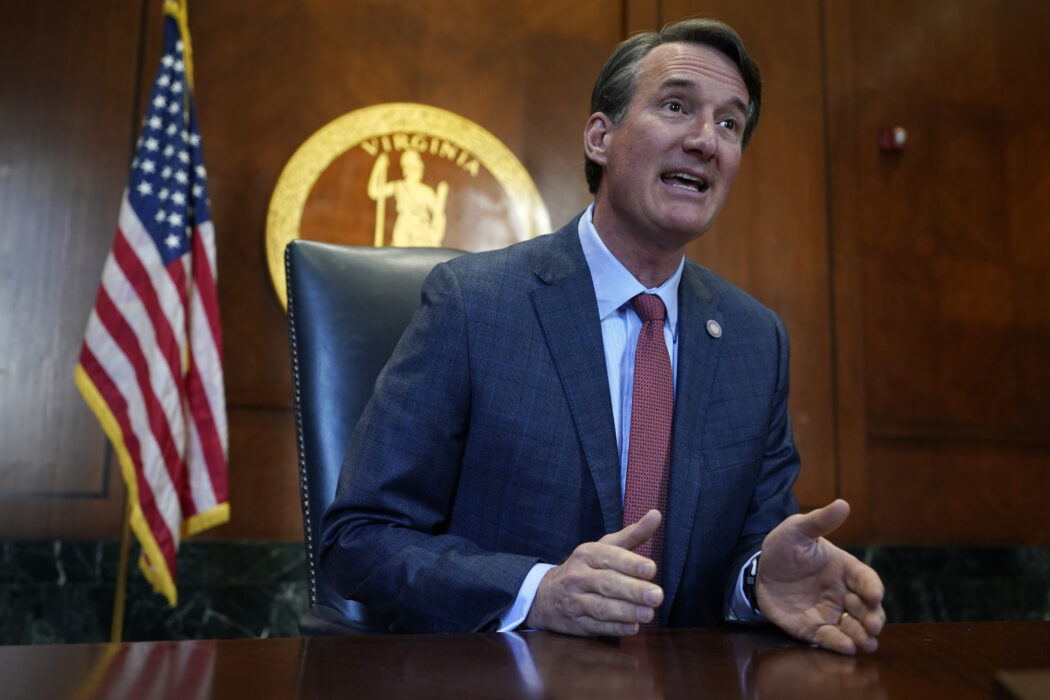

Virginia Governor Glenn Youngkin issued a sweeping rejection of Democrat-backed legislation this week, vetoing a record-setting 159 bills in what amounted to a full-scale legislative blockade against the General Assembly’s progressive agenda.
The high-volume vetoes followed the conclusion of Virginia’s 2024 legislative session, during which Democrats, holding narrow majorities in both chambers, advanced numerous proposals targeting gun policy, environmental regulation, labor law, and criminal justice. With Youngkin holding the executive pen and Democrats lacking veto-proof numbers, many of the measures were expected to be returned unsigned.
The governor’s vetoes included legislation that would have banned prayer near abortion clinics, established an “environmental justice” framework, and expanded eligibility for collective bargaining among public sector employees. Youngkin also rejected gun control bills, minimum wage hikes, and local mandates related to green infrastructure, including a measure requiring solar canopies in new development projects.
News - Virginia Lt. Gov. Winsome Earle-Sears has filed paperwork to run for governor in 2025. The Republican official aims to succeed Gov. Glenn Youngkin. pic.twitter.com/jDgPYK1EEJ
— Political Polls (@PpollingNumbers) September 5, 2024
In a separate action, Youngkin submitted 205 amendments to the state budget and exercised eight line-item vetoes. He signed approximately 600 bills and amended an additional 160, underscoring a highly active approach to legislative review ahead of his final year in office.
Youngkin made clear that his vetoes were consistent with past positions. “You can imagine that if I vetoed it last year, there’s a reasonable chance I will veto it again,” he said earlier this week. That statement held true, as many of the rejected bills mirrored earlier Democratic efforts that failed to clear the executive hurdle in 2023.
Among the vetoed measures was legislation that would have expanded the use of sick leave to include mental health days. Youngkin cited increased costs for employers as a reason for the rejection. Another bill, which would have altered criminal bond policies, was labeled “soft on crime” by Republican critics.

Observers note that Youngkin’s approach stands in stark contrast to that of Democratic governors in deep-blue states, such as California’s Gavin Newsom. While Newsom has embraced expansive regulatory policies and increased government mandates, Youngkin has taken a deliberate course of restraint, favoring limited government and business-friendly policies.
With Youngkin constitutionally barred from seeking a second consecutive term in 2025, the GOP faces a challenge in retaining control of the Executive Mansion. Virginia’s political identity remains fluid. While voters elected Youngkin in 2021, the state leaned Democratic in recent federal elections, including Kamala Harris’s 5.78-point victory in the 2024 presidential contest.