

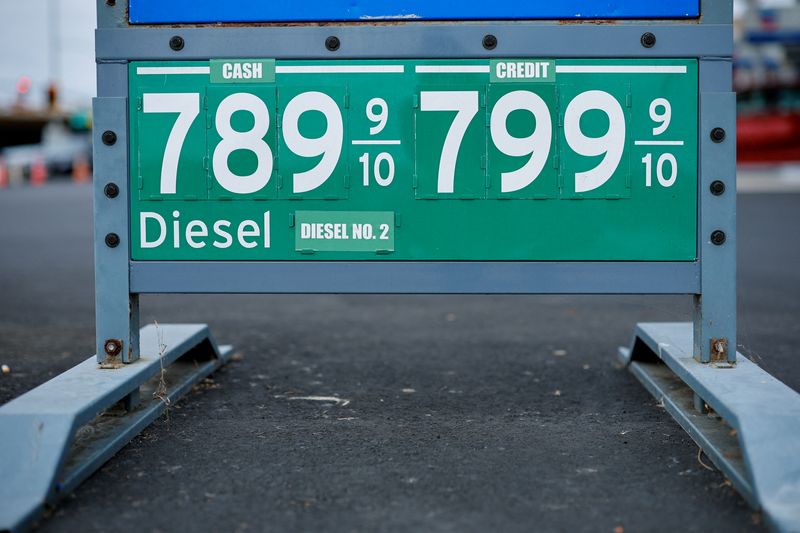

President Donald Trump said Tuesday he is open to banning diesel exports from the United States. This move comes as freight drivers and farmers face record-high prices due to strikes on Russian refineries. The President stated, "I've called for that too. I've said, let's not send out the diesel." His remarks followed a meeting with Cabinet members and Ukrainian President Volodymyr Zelensky.
According to the Washington Examiner, the national average price of diesel hit $6.52 a gallon on Tuesday. This figure marks a new record high for the fuel that powers trains, trucks, and heavy machinery. Trump noted that the decision on a ban would come "fast, one way or the other."
He explained the complex balance of fuel markets to the gathered officials. The Washington Times reports that Ukrainian strikes on Russian refineries are a key factor driving these costs.
Republican leaders in Congress are backing the President's potential action to lower costs. Senator Chuck Grassley of Iowa called for an export embargo last week to help the agricultural sector. Farmers were cautioned that fuel expenses being high would soon cause prices to skyrocket. According to the Washington Examiner, agriculture and other vital economic areas suffer under expensive diesel costs.
Representative Ashley Hinson of Iowa urged her party to act quickly on all fronts. She urged Republicans to employ all available methods to offer relief from soaring prices. Hinson also called for a suspension of the gas tax and greater use of E15 ethanol fuels. She proposed creating specific relief programs for farmers and truckers who are struggling with these costs.
Treasury Secretary Scott Bessent confirmed the administration is studying the feasibility of a ban. Officials are reviewing if a complete or partial ban is viable given total refining capacity limits. The goal is to see if stopping exports can effectively lower domestic prices without causing other market issues.
The Washington Examiner reported that supply chain constraints from wars in Iran and Ukraine have also contributed to the price spike. These global conflicts have tightened supply and pushed costs higher for American consumers. The administration is now looking at how domestic production can be used to stabilize the market.

It remains unconfirmed whether a full ban or a partial restriction will be implemented. The President has not set a specific date for an official announcement. However, the pressure from farmers and the rising cost of fuel suggest action is imminent. The situation will likely evolve quickly as the administration reviews the data.