

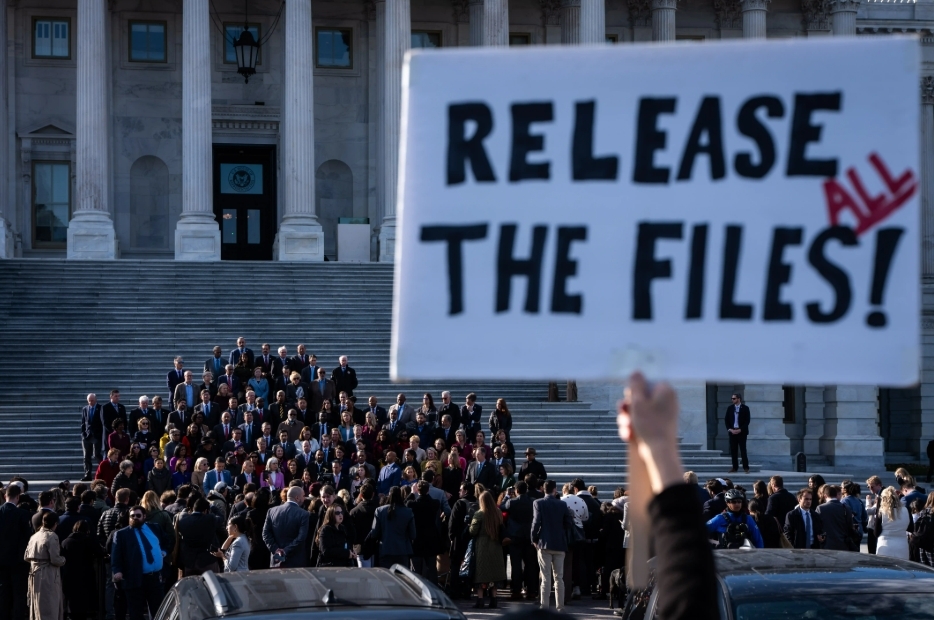

On Tuesday, the U.S. Senate unanimously approved the Epstein Files Transparency Act, marking one of the rarest displays of bipartisan agreement in recent memory—and delivering a seismic blow to years of speculation, secrecy, and politically weaponized rumor surrounding the case of Jeffrey Epstein.
Just hours earlier, the House passed the bill in a stunning 427-1 vote, with only Rep. Clay Higgins of Louisiana breaking ranks. The gallery erupted as Epstein’s survivors, some present for the vote, wept and applauded. What had once seemed like a political landmine became, overnight, a full congressional reckoning.
And yet, what’s most striking isn’t just that it passed. It’s how fast the tide turned—particularly on the Republican side.
For months, Democrats had led the charge to release the files, hoping to tie Epstein’s shadowy web to President Donald Trump. But on Monday, Trump made a calculated—and decisive—move. He publicly endorsed the bill, told House Republicans to vote yes, and pledged to sign it the moment it reached his desk. “Let the public see everything,” he said. “I’m tired of the lies. This will hurt Democrats, not us.”
This is a damning admission that there was intelligence community involvement with Epstein. Remember Pam Bondi met Republican congress members in the situation room. Which was only needed if there was classified information in the files. https://t.co/N4jqd6AphF
— Cernovich (@Cernovich) November 18, 2025
That statement turned the temperature of the debate overnight. House Speaker Mike Johnson, who had previously echoed caution, reversed course. GOP holdouts fell in line. By Tuesday, even Senate Majority Leader Chuck Schumer—clearly anticipating conflict—prepared to challenge any effort to stall the bill. He needn’t have worried. The Senate passed it by unanimous consent.
Even so, Higgins’ lone dissenting vote offered a rare note of complexity. His concern? That innocent individuals, including witnesses and family members, might be swept up in the data dump. While the bill allows redactions to protect victim identities and shield ongoing investigations, Higgins pushed for more explicit privacy guarantees—a signal that future debates over implementation may still arise.
The law now heads to President Trump, whose signature will trigger the release of all unclassified DOJ records tied to Epstein’s investigation and prosecution—including travel records, flight logs, and names of “government officials and politically exposed individuals.”

The Justice Department has 15 days to begin releasing documents, and must file a report detailing everything published, redacted, and withheld—including the names of all government officials and “politically exposed persons” referenced.