

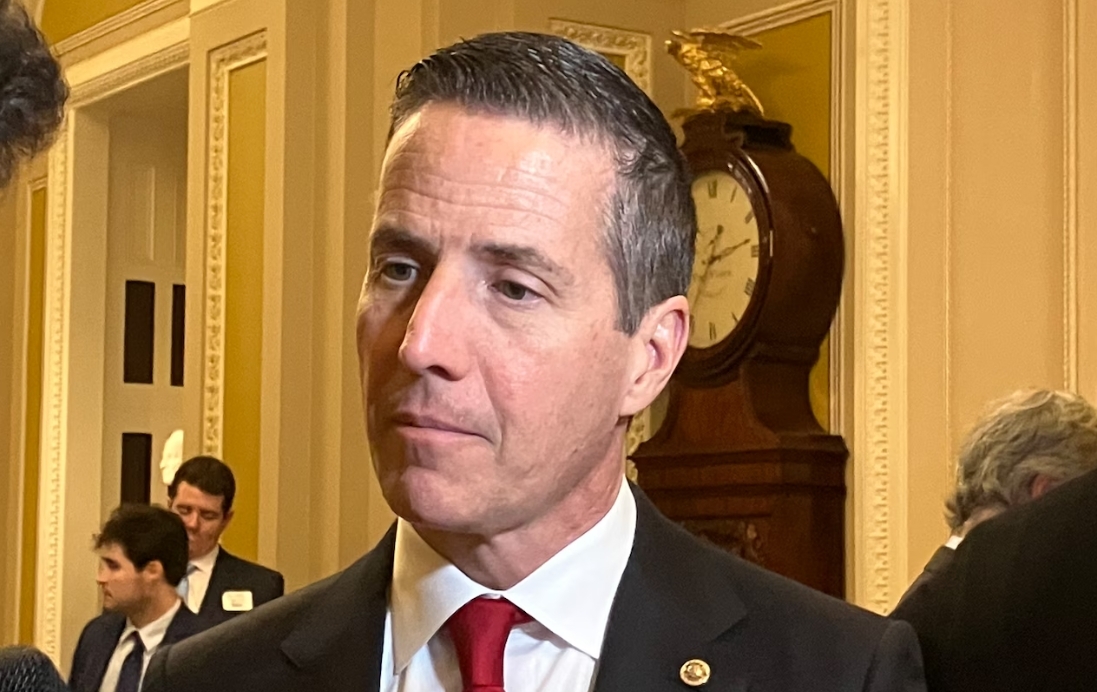

A dramatic clash unfolded in the Senate chamber as U.S. Sen. Bernie Moreno of Ohio attempted to fast-track a bill that would fundamentally reshape how welfare recipients interact with international money transfers.
The proposed legislation, titled the Stopping Transfers of Public Funds Abroad Act, aims to penalize individuals who receive public assistance and simultaneously send money overseas. What followed was a procedural block by Democrats and a fiery response from Moreno that underscored the deep divide surrounding immigration, welfare policy, and taxpayer accountability.
At the core of the bill is a straightforward requirement: anyone initiating an international wire transfer would need to certify that they are not receiving public assistance. Failure to disclose that status could result in a staggering $100,000 fine.
Moreno argues that the measure is designed to prevent what he characterizes as an abuse of taxpayer-funded benefits. According to the senator, individuals who have disposable income sufficient to remit funds abroad should not be drawing from welfare programs funded by American workers.
The financial backdrop adds weight to the debate. Estimates from the Federation for American Immigration Reform indicate that at least $200 billion is sent annually from the United States to 134 countries in the form of remittances. In 2021 alone, Mexico received approximately $52.6 billion from U.S.-based senders, followed by India at $15.8 billion, Guatemala at $14.7 billion, the Philippines at $12.8 billion, and China at $12.7 billion. These figures highlight the vast scale of outbound transfers.
🚨BOOM—@berniemoreno just BURNED Democrats for choosing ILLEGALS over AMERICANS.
"When you've been here for 30 years in Washington, DC, you think it's perfectly NORMAL for government to provide AID to those in need & then have those poeple send that money OVERSEAS...… pic.twitter.com/i1o3YXII7g
— Townhall.com (@townhallcom) February 25, 2026
Moreno and supporters of the bill emphasize the economic implications. Funds sent overseas are not circulated within the domestic economy, potentially reducing consumer spending at home. Moreover, concerns have been raised about transparency and oversight once those dollars leave U.S. borders. Critics point to the possibility—though not quantified—of remittances indirectly supporting criminal enterprises, including cartels.
The impact is particularly pronounced in parts of Central America, where remittances from the United States account for roughly 20 percent of GDP in countries such as Honduras and El Salvador, according to FAIR. That statistic underscores how deeply reliant certain economies have become on U.S.-based income transfers.

When Moreno sought to move the bill forward through unanimous consent, Democratic opposition halted the effort. The procedural roadblock triggered sharp remarks from the Ohio senator, who framed the proposal as a matter of fairness and fiscal responsibility. “If an individual has enough cash to send money overseas, they have no business taking welfare benefits from hardworking Americans,” Moreno stated in a news release.