

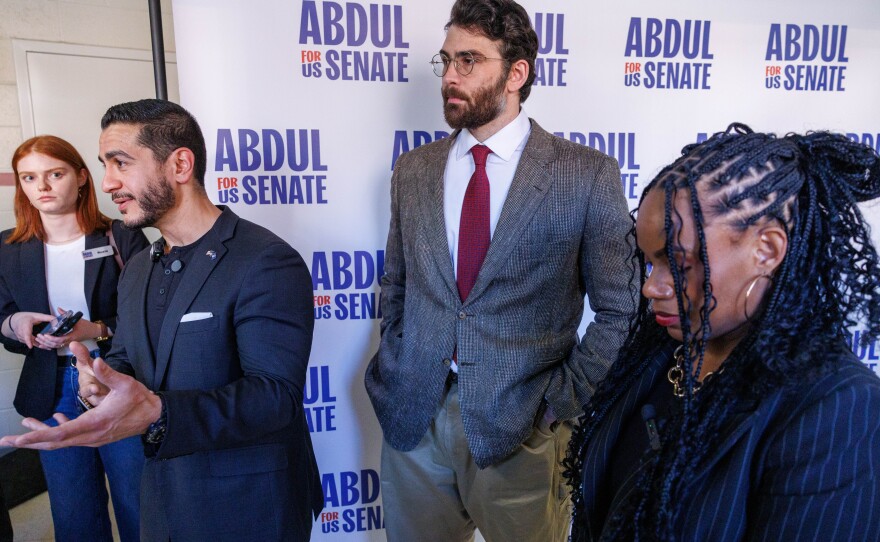

The remarks landed in the middle of an already charged political setting, where messaging, alliances, and associations all collided at once.
At the rally, Rep. Summer Lee framed political division as something deliberately redirected away from economic power. In her telling, conflict is often steered toward cultural or social differences—religion, appearance, background—rather than toward those with significant wealth and influence.
Her phrasing singled out “the upper class” as the exception in that dynamic, positioning them as a focal point for political accountability rather than ordinary Americans.
She then pivoted to a more pointed reference, mentioning what she described as “the biggest sex trafficking ring in our country,” an apparent allusion to Jeffrey Epstein. The comment connected her broader argument about power and accountability to a specific, widely known criminal case involving wealthy and well-connected individuals.
The setting added another layer. The event was tied to Michigan Senate candidate Abdul El-Sayed, who is competing in a Democratic primary with backing from Sen. Bernie Sanders. Also present was Rep. Rashida Tlaib, reinforcing the alignment with the party’s progressive wing.
But much of the attention centered on Hasan Piker, the Twitch streamer who headlined the rally. Piker has a long record of controversial statements that have drawn criticism across the political spectrum, including remarks about 9/11, Israel, and other geopolitical issues. His presence gave critics of the event an opening to shift focus away from policy and toward judgment about platforming polarizing figures.
Lee did not walk back her participation. Instead, she reframed the criticism as misplaced, arguing that political energy should be directed at larger, more immediate concerns.

She also drew a line between appearing alongside someone and endorsing everything they have said, a distinction echoed by El-Sayed, who explicitly rejected Piker’s past remarks while maintaining that shared appearances do not imply full agreement.
The political ripple effects were immediate. El-Sayed’s primary opponents seized on the association, with Rep. Haley Stevens calling the decision to campaign with Piker unacceptable given the scope of his past comments. The criticism signals how intra-party contests are being shaped not just by policy differences, but by perceived alliances and the boundaries candidates are willing to draw.