

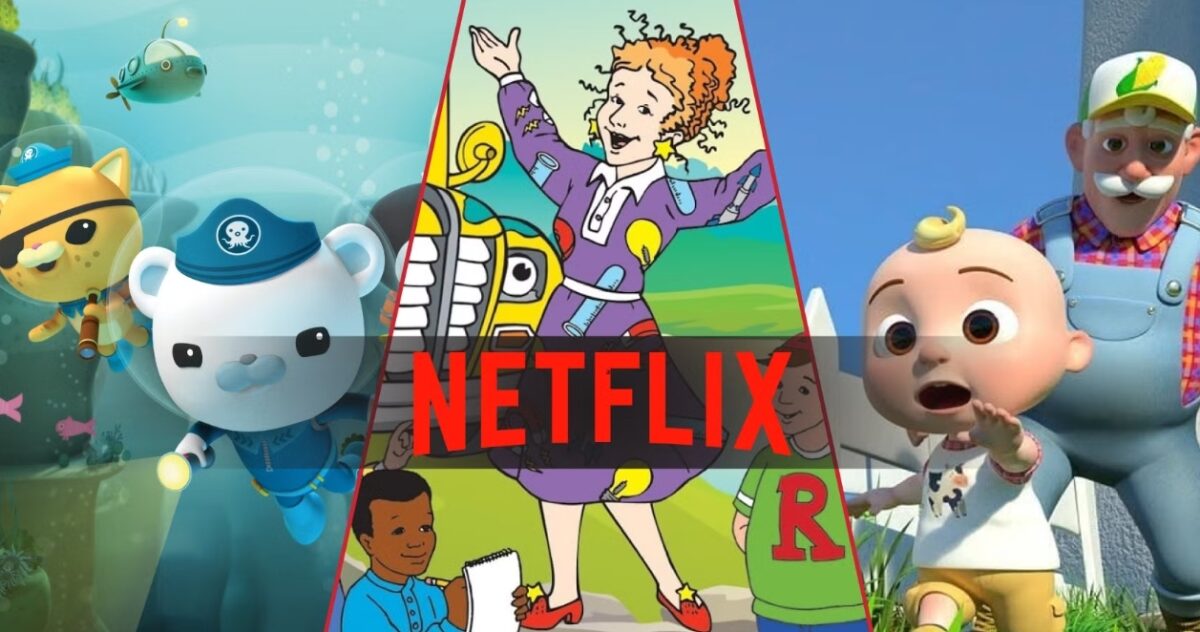

It’s no longer speculation or parental paranoia. It’s documented, measured, and confirmed: children’s programming on Netflix is saturated with LGBTQ themes — and often aimed at the youngest possible viewers. That’s the conclusion of a detailed new report from Concerned Women for America (CWA), which shines a spotlight on a dramatic shift in the cultural content of children's entertainment.
According to the data, nearly one in three Netflix shows rated for children contains LGBTQ messaging. That number rises to 41% in shows categorized as TV-G or TV-Y7 — the very ratings parents once trusted to mean “safe for all ages.” And in the programming designed for preschoolers — yes, preschoolers — more than 20% of shows feature characters or narratives that explicitly or implicitly promote gender ideology, sexual identity concepts, or nontraditional family structures.
It’s hard to overstate how quickly this shift has taken place. Just a decade ago, sexuality — in any form — was considered off-limits in children’s content. But today, not only is it common, it's pervasive, and in some cases, central to the plot. Take Dead End: Paranormal Park, which sparked online backlash after a clip of a transgender character’s "coming out" moment went viral. Elon Musk’s reaction — calling to “cancel Netflix” — briefly cost the company an estimated $15 billion in market value. But that show was just one example in a pattern that is now institutional.
The study's methodology was simple: examine 326 Netflix programs rated TV-Y, TV-Y7, or TV-G, and categorize the LGBTQ content. Researchers found that even legacy titles such as Strawberry Shortcake, The Magic School Bus Rides Again, and She-Ra have been rebooted or repackaged to include transgender, nonbinary, or “queer-coded” characters. According to CWA President Penny Nance, the discovery that 1 in 5 preschool shows now include LGBT messaging was particularly jarring: “They’re targeting the smallest viewers,” she said.
Nance argues this isn’t about representation — it’s about saturation. LGBTQ-identifying individuals make up a fraction of the population, yet the share of children’s content featuring those themes is dramatically higher, especially post-2021. She links the sharp uptick in LGBTQ content in kids’ shows with a simultaneous rise in children identifying as transgender or nonbinary. While correlation doesn’t prove causation, the timing is hard to ignore. According to Gallup, Gen Z’s LGBTQ self-identification doubled in just six years — from 11% in 2017 to over 20% in 2023.
And that matters, Nance says, because children are highly impressionable — something advertisers have known for decades. “Parents are being gaslit,” she said. “Anyone who’s ever paid for an ad knows this. And yet, we're told it’s all innocent fun, or just another perspective.” But when even The Baby-Sitters Club becomes a vehicle for sexual identity storytelling, parents begin to wonder: is there any neutral ground left?
Netflix, for its part, seems to view the report as validation, not criticism. The company’s own 2023 diversity summary proudly highlighted that over half of its episodic programming featured LGBTQ characters as 10% or more of the cast — far exceeding national demographic trends.

That gap, says Nance, is the entire point. It’s not reflective — it’s agenda-driven. And the traditional safeguards that once helped parents navigate age-appropriate material are no longer trustworthy. After all, when a preschool show rated TV-Y introduces trans- or nonbinary-coded characters, how exactly is a parent supposed to vet that in advance?
“The days of turning on a show and walking away are over,” Nance warns. And she's not exaggerating. Netflix and other platforms have adopted a new default setting: assume the content will include progressive social themes, and design accordingly.
The media war for children's minds isn't coming. It’s already here — and it's in your living room.