

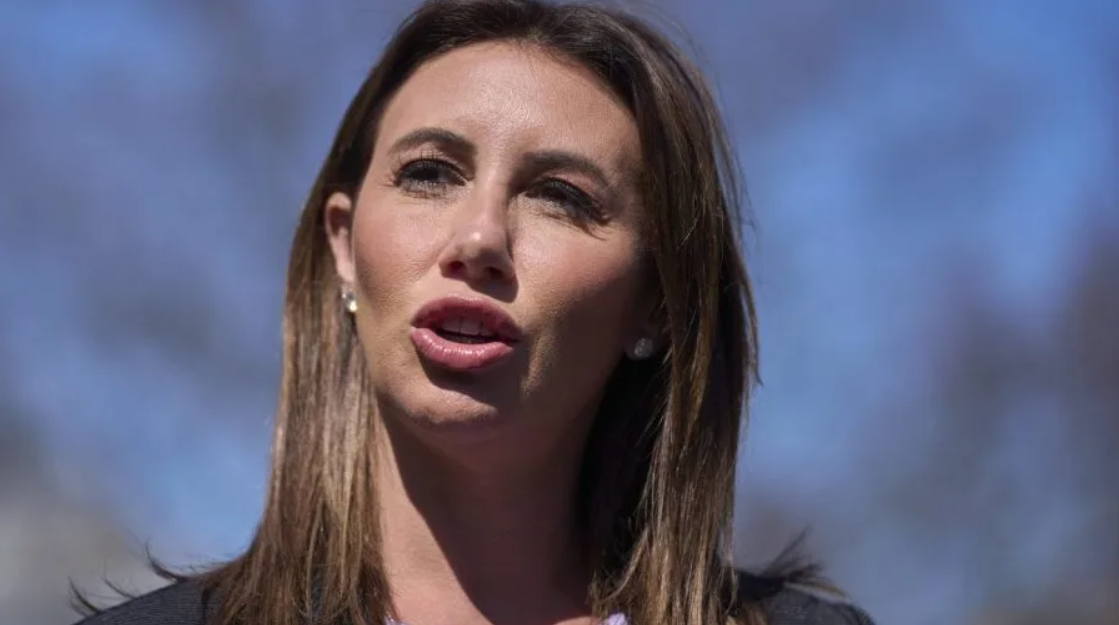

A dramatic legal clash over control of the U.S. Attorney’s Office in New Jersey reached a boiling point Thursday, when a federal judge ruled that Alina Habba has been unlawfully serving as acting U.S. Attorney since July 1.
In a sharply worded opinion, Chief Judge Matthew W. Brann of the Middle District of Pennsylvania declared that Habba—appointed under a controversial procedural maneuver by the Trump administration—lacked the lawful authority to occupy the role. The ruling directly challenges the executive branch’s attempt to sidestep judicial oversight and has thrown the state’s top federal prosecutor’s office into chaos.
Judge Brann, an Obama appointee, wrote that Habba’s continued exercise of prosecutorial power after her 120-day interim appointment expired “may be declared void.” The court put the ruling on hold pending appeal, but the legal implications are already reverberating nationwide.
The backstory reads like a modern-day constitutional standoff.
Habba, a former Trump personal attorney and political surrogate, was appointed interim U.S. Attorney for New Jersey in March 2025. When her term expired in July without Senate confirmation, federal judges in New Jersey—under a rarely used statute—moved to fill the vacancy by appointing her deputy, Desiree Leigh Grace, a career prosecutor respected within the office.
But within hours of that appointment, Attorney General Pam Bondi removed Grace and installed Habba back at the top by naming her First Assistant U.S. Attorney—a title that would automatically place her as acting U.S. Attorney under federal succession rules. Critics immediately cried foul, calling it a legal sleight of hand meant to circumvent judicial authority.
Bondi defended the move, stating on X: “This Department of Justice does not tolerate rogue judges—especially when they threaten the President's core Article II powers.” Her comment sparked fierce backlash from judicial watchdogs and lawmakers alike.

Now, Judge Brann has sided with the challengers who argued that Habba’s reinstallation was improper and unconstitutional. His decision underlines a fundamental tension: Who truly has the power to control U.S. Attorney appointments when the Senate fails to act? And more pointedly—can a president bypass that process entirely?
Senators Cory Booker and Andy Kim (D-NJ) hailed the ruling as a win for the rule of law, slamming the Trump administration for “blatantly attempting to intimidate” the judiciary and weaponize federal prosecutions.
The Trump administration, however, is digging in. Deputy Attorney General Todd Blanche decried the court's actions as a political ambush. “This was never about law—it was about politics,” he wrote, accusing the district judges of colluding with Senate Democrats to block the President’s nominee.
Meanwhile, the U.S. Attorney’s Office in New Jersey remains without a clearly recognized leader. Grace has been fired, but her judicial appointment technically still stands. Habba, declared unlawfully in power, continues to operate pending appeal.
The implications are vast. Not only are active prosecutions now under legal scrutiny, but the legitimacy of future actions under Habba’s leadership is also in jeopardy.