

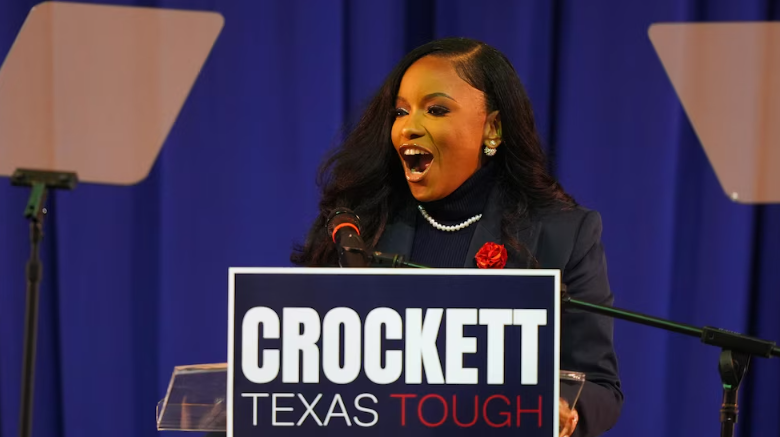

After months of hinting and online theatrics, Rep. Jasmine Crockett has officially entered the high-stakes race for U.S. Senate in Texas — a move that throws a bright spotlight on the increasingly fractious Democratic landscape in a state Republicans still dominate.
The Dallas-area congresswoman, known for her combative style and frequent TV appearances as a Trump critic, filed last-minute paperwork to join the Democratic primary. Her campaign announcement is expected to follow within hours. Crockett, 44, had been teasing the decision for weeks on social media, using her signature blend of snark and bravado to stir speculation and, evidently, strike a few nerves.
“It is hilarious to me that me saying that I will announce what I plan to do on 12/8… is scaring the heck out of so many people,” she wrote last week, adding, “Only the threat gets attacked.”
But it’s more than a threat now. With Crockett entering the race, the Texas Democratic field has shifted dramatically — so much so that former Rep. Colin Allred, who unsuccessfully challenged Ted Cruz in 2024, promptly withdrew from the contest.
His early exit is telling: Crockett may lack statewide experience, but she commands a devoted progressive base and thrives in the media spotlight, especially when the narrative is built around resistance to Trump.
Still, not everyone is stepping aside. State Rep. James Talarico remains in the fight, running a more grassroots-oriented campaign pitched at unifying the party's disparate factions. With Crockett now in the mix, the primary is shaping up to be a test of style versus structure — populist firebrand against policy-focused movement builder.
Meanwhile, the Republican field is already drawing national attention, with Sen. John Cornyn facing a primary challenge from Attorney General Ken Paxton and rising conservative star Rep. Wesley Hunt.

All three are jockeying for the support of Donald Trump, whose endorsement could effectively clear the lane for a nominee. So far, Trump has held his fire, letting the candidates audition for who will best carry out his agenda in what could be his final two years in office.
Though the Cook Political Report currently rates the 2026 Texas Senate race as “Likely Republican,” Democrats are gambling on a high-turnout cycle, an energized base, and a bruising GOP primary to flip the script. Trump may have won Texas comfortably in 2024, but the state is not immune to national political volatility — especially if the Democratic nominee can turn media attention into momentum.