

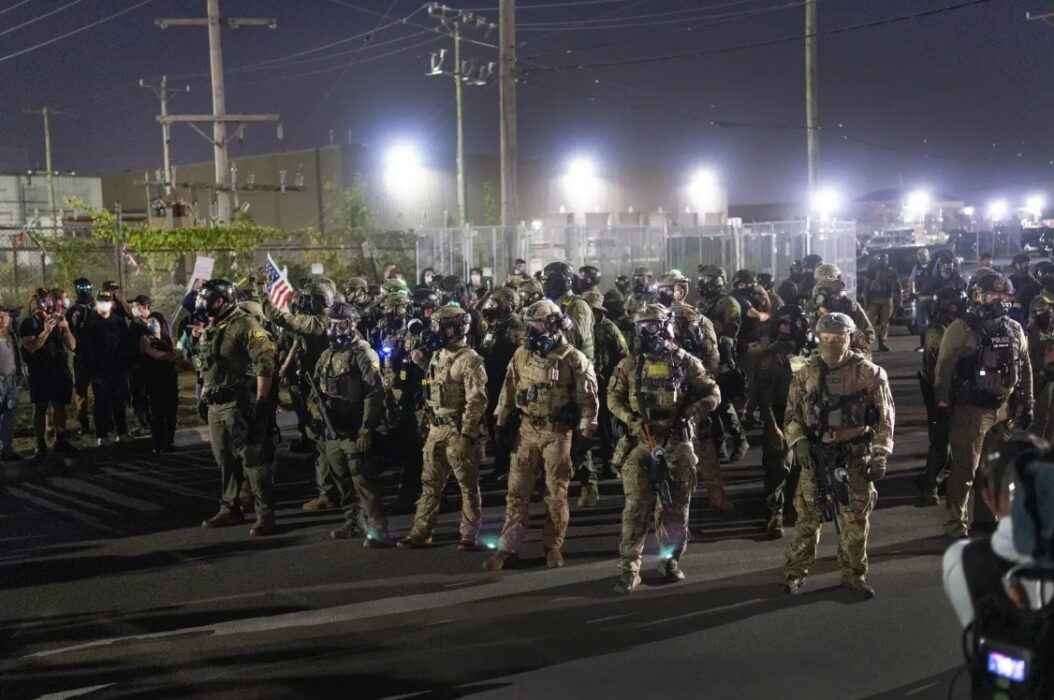

In a dramatic predawn sweep that read like a scene from a cinematic thriller, federal agents rappelled from a Black Hawk helicopter onto the rooftops of Chicago residential buildings this week as part of a major immigration enforcement operation aimed at alleged members of the Tren de Aragua gang.
The operation — led by ICE with tactical support from the FBI and U.S. Border Patrol — targeted high-priority individuals the government says are tied to a Venezuelan crime syndicate blamed for trafficking, violence, and cross-border offenses.
CHICAGO NIGHT RAID: Nearly 300 federal agents swept a Chicago apartment complex in what officials described as a crackdown on illegal immigrants accused of associating with Tren De Aragua. @MikeTobinFox on the scene. pic.twitter.com/uuX7431X4g
— Fox News (@FoxNews) September 30, 2025
Officials described the raid as highly coordinated. Nearly 300 federal agents and officers converged on a five-story apartment complex in the South Shore neighborhood after days of planning and rehearsals; U.S. Border Patrol commander-at-large Gregory Bovino called the execution “very smooth.” Roughly 30 undocumented immigrants were taken into custody during the action, several identified as suspected gang affiliates.
For the administration, the operation was part of a broader posture of escalation — including an executive order signed in January designating Mexican drug cartels and groups like Tren de Aragua as terrorist organizations — and a rolling enforcement campaign named Operation Midway Blitz aimed at removing noncitizens with criminal histories from U.S. communities.
The federal push comes amid heightened rhetoric from the White House about lawlessness in cities such as Chicago and threats to deploy additional forces, including the National Guard, should crime continue to surge.
Homeland Security spokespeople framed the raids in stark terms: under the current administration, “nowhere is a safe haven for criminal illegal aliens,” they said, promising aggressive arrest, removal, and deterrence.
🚨 HOLY CRAP! Over 300 federal agents, some repelling down from BLACKHAWKS, RAIDED a building in Chicago resulting in the arrests of several dozen illegals
Many of those arrested were members of the vioIent Tren de Aragua gang.
MORE OF THIS! 🔥 pic.twitter.com/IbnKAgL3zu
— Nick Sortor (@nicksortor) September 30, 2025
But the tactics and scale of the raids have provoked immediate backlash. Immigrant-rights groups staged protests, and Illinois Democratic officials, including Governor J.B. Pritzker, criticized the operations as counterproductive to public safety.

The initiative was launched in the wake of the hit-and-run death of college student Katie Abraham, a case that officials say galvanized demands for tougher enforcement; opponents counter that aggressive sweeps in residential neighborhoods sow fear, risk civil liberties, and strain community trust with law enforcement.