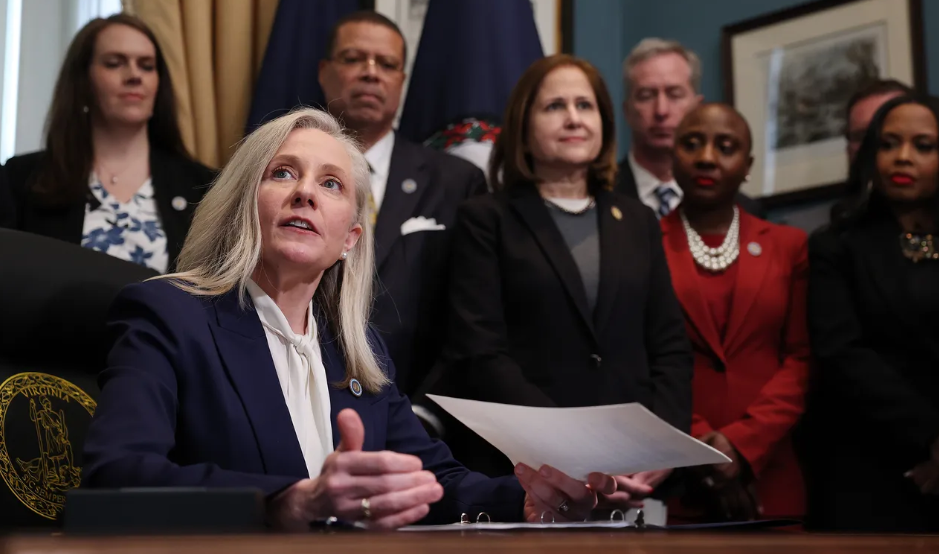

There’s a moment in politics when the campaign version of a candidate collides with the governing version, and for Abigail Spanberger, that moment arrived quickly. The image presented during the 2025 race—measured, pragmatic, bipartisan—was not accidental. It was carefully built over three terms in Congress, representing a district that did not reward ideological excess. That brand helped deliver a decisive 15-point victory, a margin that suggested confidence, or at least comfort, among a broad coalition of Virginia voters.
Two months into her term, that coalition looks fractured.
A Washington Post–Schar School poll places her approval rating at 47 percent, with 46 percent disapproving and 7 percent undecided. That near-even split is not just a statistical curiosity—it marks a sharp drop from the traditional early-term grace period Virginia governors have historically enjoyed. Compared to predecessors dating back to the 1990s, Spanberger’s numbers lag by double digits. Even Glenn Youngkin, who entered office after a far tighter race, exited with stronger figures than Spanberger currently holds at the outset.
Abigail Spanberger has the worst favorability rating after 80 days in office of any Virginia Governor of the 21st century. pic.twitter.com/l2hA7l5ApH
— Greg Price (@greg_price11) April 6, 2026
The reasons for this shift are not difficult to trace. Policy decisions have moved quickly and, for many voters, sharply. Her administration’s stance on immigration enforcement—particularly the decision to end cooperation agreements between state and federal authorities—drew immediate attention. At the same time, her alignment with efforts to redraw congressional districts in ways that favor Democrats has added another layer of tension, especially in a state where political balance has often been closely contested.
These moves have energized critics while hardening support among allies, producing a distinctly polarized response. The poll reflects that divide clearly, with little middle ground remaining. That erosion of crossover appeal stands in contrast to the bipartisan identity that defined her campaign.
Abigail Spanberger approval PLUMMETING - WaPo pic.twitter.com/ub81b5sGZ1
— Townhall.com (@townhallcom) April 6, 2026
What makes the situation more precarious is timing. Early-term approval ratings often serve as a buffer, giving governors space to implement their agenda before facing sustained political consequences. Spanberger’s numbers suggest that buffer may be thinner than expected.
As the redistricting fight unfolds and policy debates intensify, explanations for her declining approval are already beginning to take shape across the political spectrum.