


The partial government shutdown driven by a standoff over Department of Homeland Security funding shows no immediate signs of resolution. At issue is a dispute over proposed Immigration and Customs Enforcement reforms, with congressional Democrats withholding support for a DHS funding measure. Republicans argue that ICE and Border Patrol funding is already secured under previously passed legislation, meaning the agencies most directly affected by the lapse are the Transportation Security Administration (TSA), the U.S. Coast Guard, and the Federal Emergency Management Agency (FEMA).
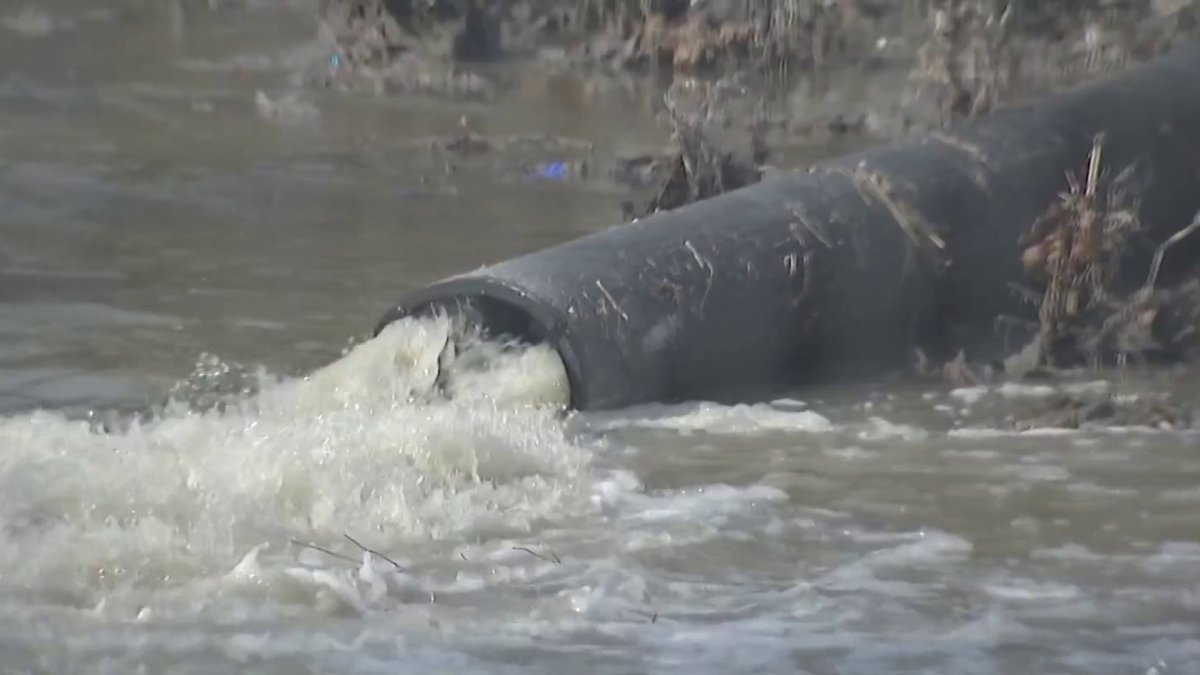
Now, as that impasse drags on, FEMA finds itself at the center of a major environmental and public health response in the nation’s capital.
Democrats in Congress have shut down @FEMA funding—leaving our hard working employees to work without pay—yet FEMA is now stepping in to coordinate cleanup of one of the largest raw sewage spills in U.S. history.
Thanks to gross mismanagement by Maryland's Democrat leaders,…
— Secretary Kristi Noem (@Sec_Noem) February 17, 2026
According to reports, DC Water acknowledged that it significantly understated contamination levels after hundreds of millions of gallons of raw sewage spilled into the Potomac River. Initial figures were reportedly off by a factor of 100. Revised estimates place the total discharge at approximately 242 million gallons, with remediation efforts projected to take as long as nine months. The scope of the spill has raised concerns about infrastructure oversight, environmental safeguards, and public transparency.
Because of the scale of the disaster, federal coordination has been activated. President Donald Trump directed FEMA to lead multi-agency efforts to contain the environmental damage and restore water safety across the affected region. The Potomac River serves as a critical waterway for the District of Columbia and surrounding areas, making rapid containment and cleanup a matter of regional urgency.
The timing has sharpened partisan tensions. With FEMA funding caught in the broader DHS dispute, agency employees are working without pay during the shutdown. Homeland Security Secretary Kristi Noem publicly criticized Democrats for blocking funding while FEMA personnel manage one of the largest sewage spills in recent U.S. history.
In a statement, Noem argued that it is contradictory to withhold pay from FEMA workers while simultaneously relying on them to coordinate a massive environmental remediation effort. She attributed the crisis to infrastructure mismanagement at the local and state levels, pointing specifically to leadership in Maryland and Washington, D.C.
We @KatiePavlichNN reached out to VA Governor Spanberger four days ago and have received no response. We also reached out to MD Governor Moore and DC Mayor Bowser. Nothing. https://t.co/yzFXPy91ni
— Katie Pavlich (@KatiePavlich) February 16, 2026
The spill has also drawn scrutiny toward regional officials. Maryland Gov. Wes Moore, Virginia Gov. Abigail Spanberger, and D.C. Mayor Muriel Bowser have faced questions about infrastructure oversight and intergovernmental coordination. Critics contend that public communication surrounding the contamination has been limited, while cleanup projections remain lengthy and costly.

At the core of the dispute is a broader question about governance priorities. Democrats maintain that ICE reforms are necessary and should be addressed as part of DHS funding negotiations. Republicans counter that linking immigration enforcement policy to unrelated agencies such as FEMA and TSA risks collateral consequences for frontline workers and public safety operations.
Meanwhile, FEMA crews continue their work—managing environmental containment, coordinating with regional authorities, and addressing the downstream effects of the spill. The agency’s role underscores how federal disaster response infrastructure often becomes essential when local systems falter or are overwhelmed.