

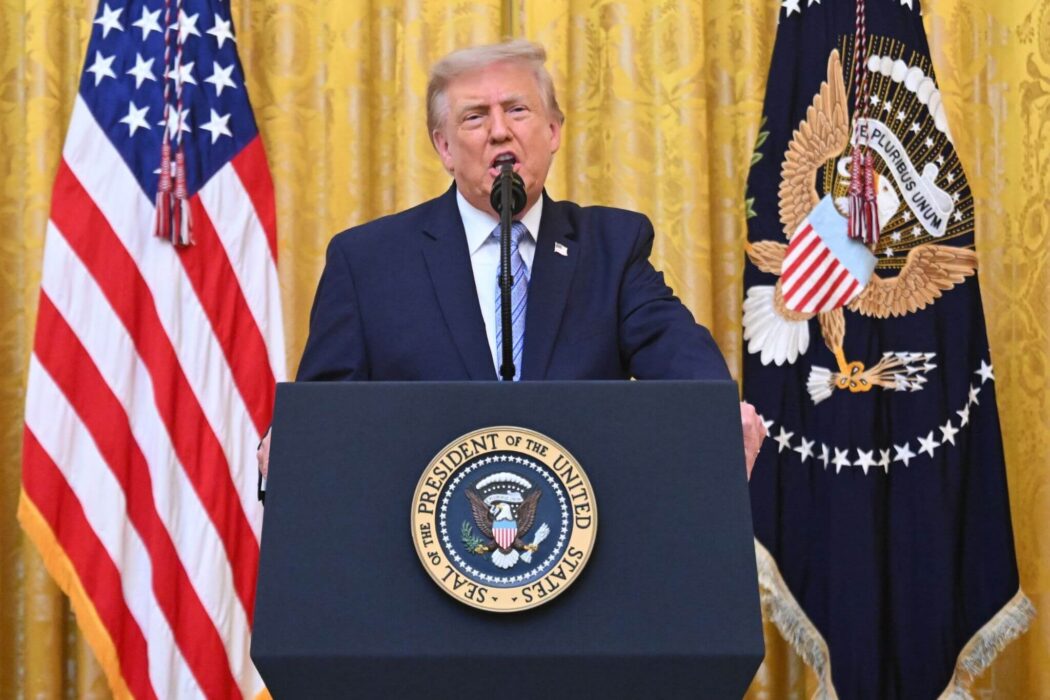

President Donald Trump's Thursday evening address to the nation was brief, focused, and largely centered on election security and the declassification of intelligence documents. While there were a few minor teleprompter stumbles, the speech itself quickly became overshadowed by the political reaction that followed, with critics and supporters offering sharply different interpretations before the address had even concluded.
For many Democrats and Trump critics, the speech was less about the details presented and more about what they believed it represented politically. Several argued that Trump was laying the groundwork to challenge unfavorable election outcomes in the future, while supporters countered that he was highlighting legitimate concerns about election integrity.
The “big speech” Trump is about to give is just another desperate attempt to prop up his wannabe dictator persona by spreading more lies about our elections.
We aren’t going to buy it…🤷🏽♀️
— Rep. Adelita Grijalva (@Rep_Grijalva) July 17, 2026
Rep. Adelita Grijalva (D-Ariz.) was among the first to respond, posting during the speech that Trump was attempting to reinforce what she described as a "dictator persona." Her criticism reflected a broader theme echoed throughout the evening by Democratic lawmakers and progressive activists, many of whom characterized the address as an effort to undermine confidence in future elections.
California Gov. Gavin Newsom also weighed in, accusing Trump of embracing authoritarian tactics. In a social media post, Newsom wrote:
"Tonight, America watched the ramblings of a mad king."
Trump does not believe in fair and free elections.
He believes in one thing: authoritarianism.
— Governor Gavin Newsom (@CAgovernor) July 17, 2026
He continued by arguing that Trump's address was not about past elections but rather the upcoming midterms.
"Before a single vote has been cast, he's already laying the groundwork to rig this election and convince YOU not to trust the results if they don't go his way. This is what authoritarians do. Don't fall for it."

Newsom urged supporters to organize, mobilize, and vote in November.
Trump supporters were quick to reject those claims, pointing instead to California's own election policies. They noted that Newsom recently signed legislation placing additional restrictions on access to voter registration systems and election technology, requiring court approval before certain law enforcement agencies can obtain that information. Critics of the governor argue those measures reduce transparency, while supporters say they protect election systems from improper access.
The Lincoln Project and several other anti-Trump organizations also criticized the speech, framing it as an attempt to cast doubt on future election results. Sen. Mark Warner (D-Va.) similarly argued that Trump was preparing to question the legitimacy of the 2026 elections.

Tonight, America watched the ramblings of a mad king.
Donald Trump’s address was not about the last election — it was THIS one.
Before a single vote has been cast, he’s already laying the groundwork to rig this election and convince YOU not to trust the results if they don’t go…
— Gavin Newsom (@GavinNewsom) July 17, 2026
Appearing afterward on CBS News, Warner called the address embarrassing and urged what he described as responsible journalists to challenge the president's claims. Some conservative commentators, however, criticized portions of the television coverage itself, arguing that networks selectively aired only segments they believed supported their preferred narrative. MSNBC also faced criticism from some viewers after cutting away from portions of the address.
Another familiar trend emerged across social media as several commentators posted variations of "I watched the speech so you don't have to," offering summaries and reactions instead of encouraging viewers to watch the address themselves. Critics of those posts argued that Americans should evaluate a presidential address firsthand rather than relying solely on commentary from television personalities or political activists.
Donald Trump is declaring war on America's election officials.
— The Lincoln Project (@ProjectLincoln) July 17, 2026
The debate also renewed attention on the SAVE America Act, legislation that Trump has identified as a priority. Supporters say the proposal would strengthen election security through measures such as requiring proof of citizenship for voter registration in federal elections. Opponents argue it could create unnecessary barriers for eligible voters and have pledged to block it in the Senate.
Sen. Patty Murray (D-Wash.) indicated her opposition to the legislation, signaling that the proposal faces significant obstacles in the upper chamber despite Republican support.
Well folks, as expected, Trump revealed essentially nothing new.
His speech was just lies & long-debunked conspiracies about the 2020 election.
This is all just a prelude to interfere in our midterms — don’t fall for it.
— Mark Warner (@MarkWarner) July 17, 2026
Conservative critics also took aim at commentary from writers associated with The Bulwark, arguing that they portrayed Trump's election security message as an effort to delegitimize future elections rather than address vulnerabilities.
Former Vice President Kamala Harris joined the criticism as well, describing the SAVE America Act as a form of voter suppression. Harris argued that Trump's focus on election integrity was an attempt to divert attention from other issues facing the country.