

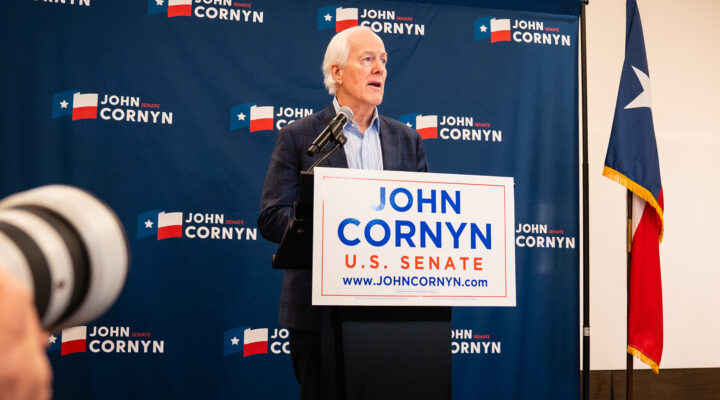

As the Republican Senate primary battle in Texas intensifies, Sen. John Cornyn finds himself navigating a politically sensitive crosscurrent: immigration policy, faith leadership, and the influence of organizations tied to global progressive funding networks.
The controversy emerged after Cornyn unveiled a new Faith Advisory Council composed of prominent Texas pastors—several of whom are connected to an advocacy coalition that has publicly supported immigration reform measures widely described by critics as amnesty.
The council, announced by Cornyn’s campaign this week, includes five religious leaders from across Texas. Among the most recognizable names are Max Lucado of Oak Hills Church in San Antonio, Dr. Jack Graham of Prestonwood Baptist Church in Plano, and Dr. Gus Reyes of the Texas Baptist Christian Life Commission in Dallas. All three figures have longstanding influence in evangelical circles and have played prominent roles in religious and social outreach throughout the state.
However, scrutiny quickly followed when observers noted that Lucado, Graham, and Reyes are signatories to the Evangelical Immigration Table’s “Principles for Immigration Reform.” The document calls for, among other measures, establishing “a path toward legal status and/or citizenship” for certain undocumented immigrants who meet specified requirements and wish to remain in the United States permanently. Supporters frame such measures as compassionate reform within a structured legal framework. Critics characterize them as amnesty policies that reward unlawful entry.
The Evangelical Immigration Table itself operates as a project of the National Immigration Forum, an advocacy organization that promotes expanded immigration policies and refugee resettlement initiatives. Financial disclosures over the years have shown that the National Immigration Forum has received grant funding from George and Alex Soros’s Open Society Foundations, a network long associated with progressive policy initiatives worldwide.
The group’s advocacy has drawn attention before. In 2013, members of the Evangelical Immigration Table traveled to Capitol Hill to lobby Republican lawmakers in support of the so-called “Gang of Eight” immigration proposal. That legislation would have created a pathway to legal status for millions of undocumented immigrants living in the United States. At the time, the coalition reportedly spent roughly $250,000 on a campaign encouraging voters to call their representatives and support the plan.
Organizations affiliated with the coalition have also pushed for broader immigration policies in recent years. World Relief, listed among the Evangelical Immigration Table’s leadership organizations, has advocated for expanded refugee admissions and immigration pathways.

The coalition has also criticized policies associated with President Donald Trump’s immigration agenda, including restrictions on work permits for asylum applicants and additional vetting procedures for refugees seeking permanent residency.
Cornyn, currently facing a primary challenge from Texas Attorney General Ken Paxton, defended his decision to include the pastors on his advisory council. In a statement, he argued that criticism directed at the clergy misrepresents their broader contributions. According to Cornyn, the pastors have spent decades ministering to families, defending unborn life, and leading faith communities across Texas. Attacks against them, he suggested, say more about the tone of the campaign than about the leaders themselves.