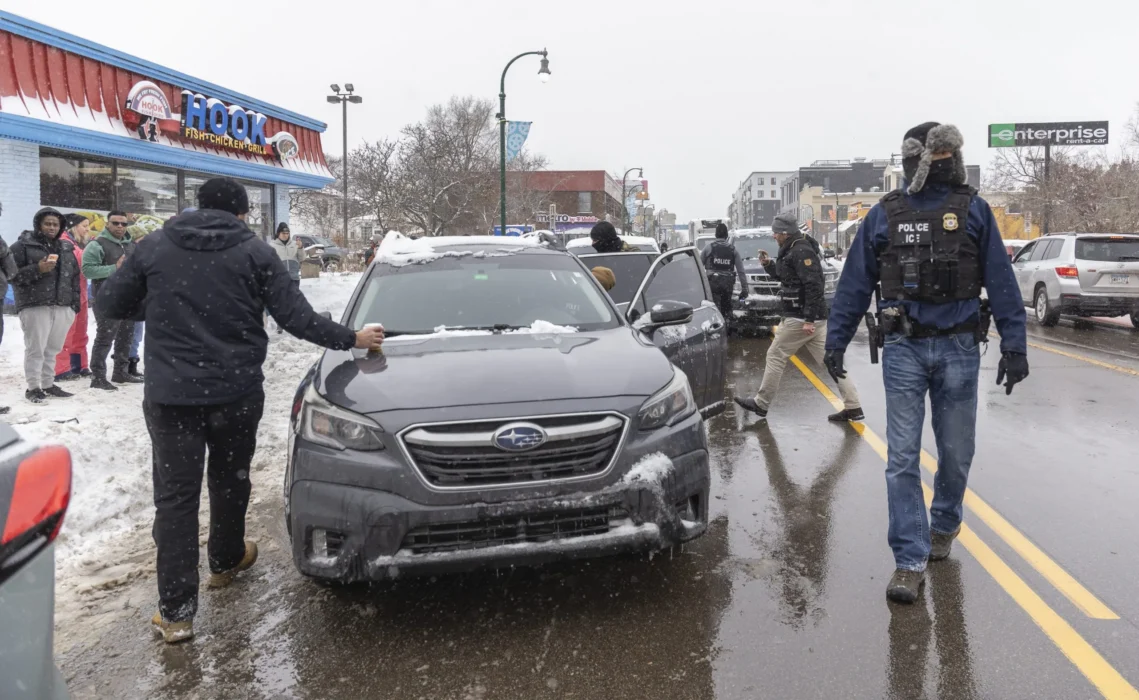

In the ongoing clash between immigration enforcement and activist opposition, a curious twist has emerged that reads almost like political satire. Online chatter and reports circulating across social media suggest that Immigration and Customs Enforcement (ICE) agents in parts of Colorado may be using an unlikely vehicle for undercover work: the Subaru.
At first glance, the detail seems trivial. But in the context of the broader political conflict over immigration enforcement, the symbolism has sparked a wave of commentary.
🚨 LMAO! ICE is now reportedly using undercover SUBARU OUTBACKS — the official vehicle of white leftist lesbians — to catch illegals off guard
This is a BRILLIANT tactic
Juan thinks one of his white saviors is rolling up, and then it ends up being ICE🤣 pic.twitter.com/bWG4KZS8xx
— Nick Sortor (@nicksortor) March 3, 2026
The backdrop to the moment traces back to events earlier in the year in Minneapolis. In January, anti-ICE activists organized street actions aimed at identifying federal immigration vehicles operating in local neighborhoods. Activists reportedly stopped vehicles they suspected of belonging to federal agents and attempted to verify who was driving them. Organizers framed the effort as a community protection measure, arguing residents had a right to know “who was in our community.”
I have a friend who is a fed & his govt vehicle is a Subaru. Very clever disguise. He couldn’t work undercover in my gas guzzlin truck-drivin tribe, but it works where he’s infiltratin. https://t.co/TnN5DGG7rc
— Michael Berry (@MichaelBerrySho) March 3, 2026
That phrase quickly spread across social media, where critics seized on what they viewed as a striking irony. For opponents of the demonstrations, the idea of activists demanding identification from drivers echoed the very immigration enforcement tactics they often condemn.
Well played ICE. Well played. 🔥🇺🇸 https://t.co/uUcF0CjkeC
— Jonathan Choe (@choeshow) March 3, 2026
Now, with the suggestion that ICE agents may be operating vehicles commonly associated—fairly or unfairly—with environmentally conscious, progressive-leaning drivers, the political theater has taken on an almost comedic edge. Subaru vehicles, long marketed around themes of sustainability, outdoor lifestyles, and community values, have become a cultural shorthand in American political humor for a certain slice of the progressive electorate.
In that context, the image circulating online is simple but potent: activists searching for federal agents could theoretically find themselves questioning drivers who appear, culturally speaking, to belong to their own political tribe.
this is actually against the constitution. the bill of rights clearly states the government is not allowed to use subarus, whether undercover or openly marked. extremely disturbing to see Trump flout our constitutional safeguards like this. https://t.co/TQw9LuafXB
— blighter (@blightersort) March 3, 2026
Whether the tactic is widespread, experimental, or simply exaggerated by online speculation remains unclear. But the conversation itself reveals something important about the current immigration debate. Both sides increasingly frame enforcement not just as policy, but as symbolism—who belongs, who decides, and how authority is exercised in public spaces.