

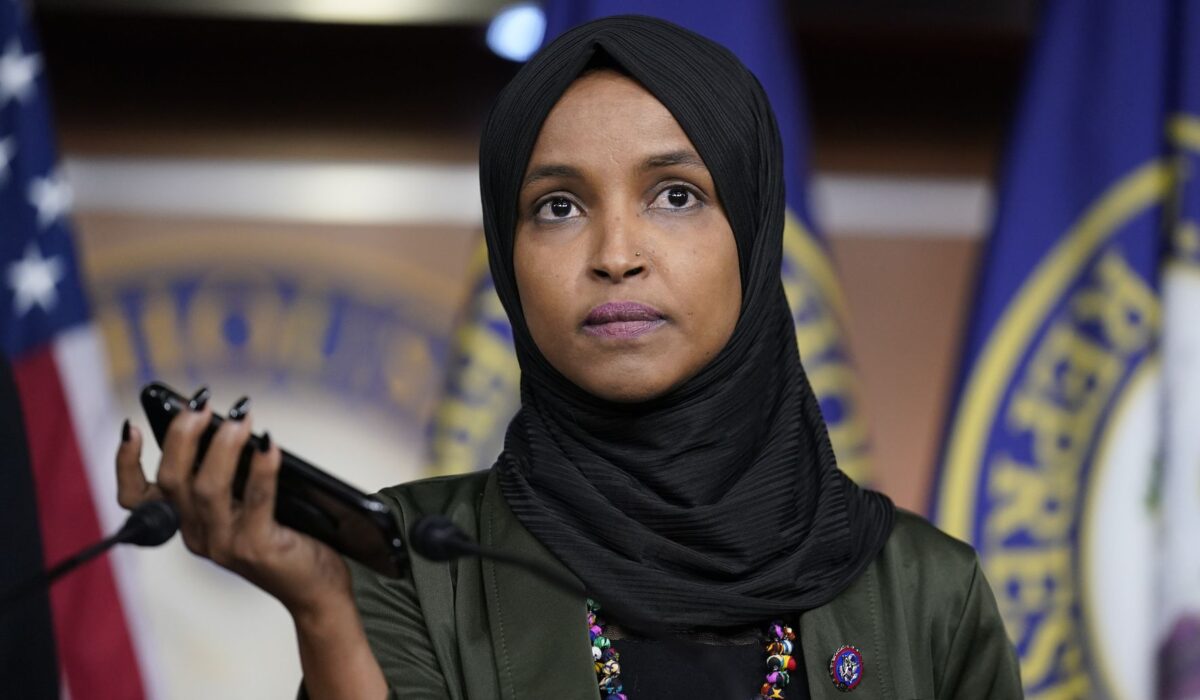

The fallout from Rep. Ilhan Omar’s remarks following the assassination of conservative activist Charlie Kirk has set a new benchmark for how far political discourse can spiral in a matter of hours — and how deeply divided Washington remains, even in the face of a national tragedy.
Omar, a Democrat from Minnesota and no stranger to controversy, told former CNN host Don Lemon that while she felt for Kirk’s widow and children, “there is no legacy to honor.” Her remarks came after repeated criticism over her reaction to the murder of Kirk, including accusations that she had downplayed or even rationalized the killing based on ideological differences. When pressed on whether she would apologize, Omar didn’t flinch. “I have nothing to apologize for,” she said, before doubling down on her assessment of Kirk’s public record, calling it “filled with bigotry, hatred, and White supremacy.”
For some, her words were simply brutally honest. For others — including a growing chorus of Republican lawmakers — they were inflammatory and disgracefully timed. The most forceful response came from Rep. Nancy Mace, R-S.C., who led a push to censure Omar over what she characterized as “hateful” rhetoric in the wake of a political assassination. But that effort fizzled after four Republicans broke ranks to vote with Democrats to table the resolution.
One of those Republicans, Rep. Tom McClintock, explained that while he found Omar’s remarks “vile and contemptible,” he defended her right to speak under the First Amendment. That stance echoed a broader philosophical tension in Congress: Should lawmakers be punished for what they say — even when it's tone-deaf or repugnant — or does the principle of free expression hold, even at the extremes?
Omar, meanwhile, hasn’t backed off. In fact, she’s sharpened her critique, describing those trying to rehabilitate Kirk’s image as “full of sh*t” and accusing conservatives of using his death as political ammunition while ignoring the broader epidemic of gun violence. Her comments on the progressive outlet Zeteo fanned further outrage after she dismissed the idea that Kirk was a good-faith debater, calling the notion laughable and “effed up.”
Here are the 4 Republicans who voted with the far Left tonight and voted with Ilhan Omar. pic.twitter.com/BCRdd2Y6J0
— Nancy Mace (@NancyMace) September 17, 2025
Kirk’s defenders see this as not just a misjudgment, but a moral failure — one that reveals the corrosive effect of partisanship at its worst. To many on the right, Omar’s response was not just insensitive; it was revealing. In death, as in life, Kirk remains a lightning rod for the culture war.
Donald Trump, never one to miss an opportunity for rhetorical cannon fire, slammed Omar as “disgraceful” and “a disgusting person,” adding that her continued presence in Congress was “hard to believe.” When asked whether she should be removed from her committee assignments, Trump didn’t hesitate: “I would support it.”

And yet, for all the noise, no formal disciplinary action has landed. Rep. Cory Mills, R-Fla., who was initially the target of a retaliatory censure resolution from Democrats, helped block Mace’s censure motion — a strategic decision that drew criticism from the GOP base but likely spared him a similar fate.