

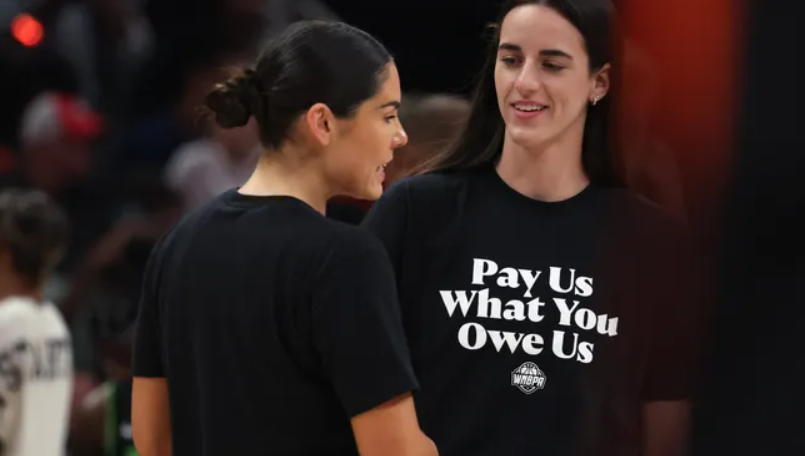

The 2024 WNBA All-Star Game took place Saturday night with little fanfare, ending in a 151-131 win for “Team Collier” over “Team Clark.” The lack of defense was expected. What wasn’t expected—or at least continues to grate—was the players’ choice of messaging during warm-ups: black shirts boldly stating, “Pay Us What You Owe Us.”
It’s a phrase loaded with entitlement and devoid of financial context. The implication is clear: WNBA players believe they are underpaid. But what, exactly, are they owed?
Start with the math. The WNBA has operated at a loss every year since its founding in 1997. The 2024 season, bolstered by Caitlin Clark’s arrival and unprecedented media coverage, still ended in a $40 million loss. Projections for 2025 place losses at $50 million. This, despite record viewership spikes and a surge in merchandise sales—nearly all of it tied to Clark’s popularity.
Both teams wearing shirts that read “Pay Us What You Owe Us” #WNBA pic.twitter.com/LB4LBAbPNr
— Aliyah Funschelle (@AliyahFun) July 20, 2025
Put bluntly, the WNBA doesn’t generate enough revenue to justify higher player salaries across the board. To suggest otherwise is to ignore basic economics.
The shirts, meant to pressure league executives ahead of upcoming collective bargaining negotiations, raise deeper questions. Are the players prepared to assume accountability for the financial performance of the league? Should they reimburse the NBA and private investors who have poured hundreds of millions into keeping the WNBA afloat?
The situation becomes even more strained when the league’s internal dynamics are considered. Clark, the primary driver of the WNBA’s current visibility, has often found herself the target of hostility from other players. Meanwhile, ticket sales and TV ratings have plummeted by over 50% since her injury absence began. That’s not a coincidence. It’s a market reaction.
A new $2.2 billion, 10-year television deal starting in 2026 may finally give the WNBA a path to profitability. However, only 42% of that revenue goes to the league itself. The remainder is designated for debt servicing and operational expenses. Even under ideal circumstances, there’s little room for sweeping pay increases in the near term.

The financial structure of the league simply doesn’t support the narrative that WNBA players are being shortchanged. Salaries must align with revenue—not rhetoric.
Until the league becomes consistently profitable and less reliant on external support, messages like “Pay Us What You Owe Us” will continue to land poorly. Optics matter, especially for a brand still struggling to find a stable audience.